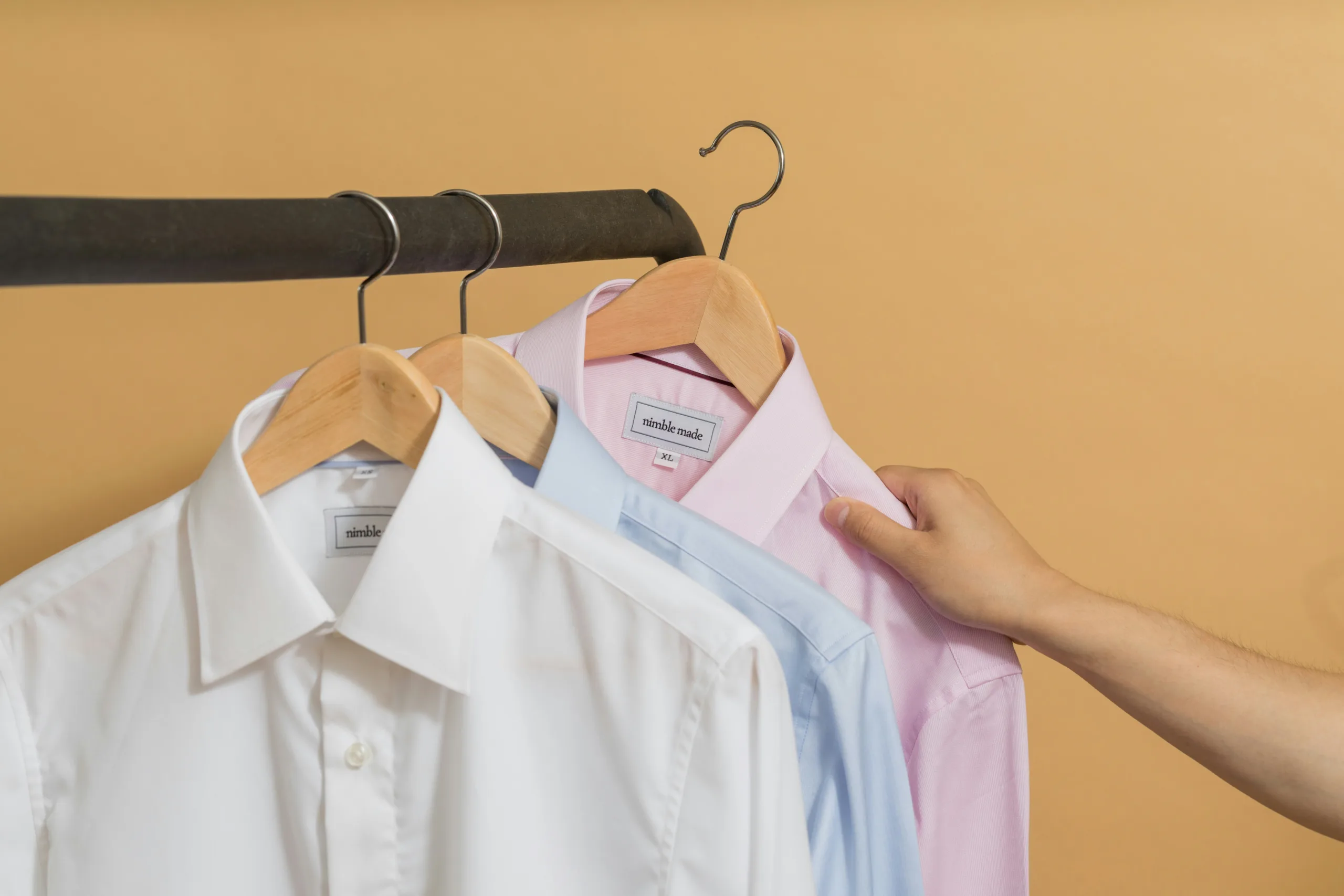
The real, science-backed difference between the two fabrics — and exactly which one belongs in your wardrobe.
You’re standing in front of a wardrobe, or a shopping cart, trying to decide between a linen shirt and a cotton shirt — and every article you’ve read so far says some version of “it depends.” That’s not wrong. But it isn’t very useful either.
Here’s what actually decides it: two plants grow fibres with completely different shapes. One is a soft, twisted ribbon. The other is a stiff, hollow tube. That single structural difference is the reason your cotton shirt clings to your back by 11 AM in June, why your linen shirt creases the moment you sit down for a meeting, and why one usually costs more than the other before a single stitch is even sewn.
This guide breaks down linen vs cotton shirts using real fabric science, in plain English, then tells you exactly which one to reach for depending on your climate, your calendar and your closet. Along the way, we’ll also cover two things almost no other article gets into: what 60 LEA linen actually means, and why Egyptian Giza cotton is a different animal from the cotton in a regular t-shirt.
Quick verdict, if you’re short on time
Linen
Choose linen if you’re fighting peak summer heat, want a shirt for travel, weekends or resort wear, and don’t mind a naturally creased, relaxed look. It breathes better, dries faster and gets stronger with every wash.
Cotton
Choose cotton if you need a crisp, structured look for the office, interviews or all-day formal wear. It holds its shape through a long day, is easier to iron, and works comfortably in every season, not just summer.
What’s the real difference between linen and cotton?
Cotton fibre grows as fluffy hair around a cotton plant’s seed. Under a microscope, it looks like a flat, twisted ribbon — a shape that lets thousands of cotton fibres lock together into a smooth, uniform, soft yarn.
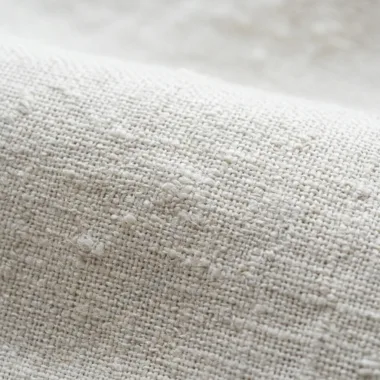
Linen fibre comes from inside the stem of the flax plant, where the plant needs it to stay upright against wind. That job requires a completely different shape: a stiff, hollow, straw-like tube reinforced with natural plant gums. This is the single fact that explains almost everything else in this guide — the shape and stiffness of each fibre decides how much air moves through the weave, how fast sweat evaporates, how the fabric creases, and how long the shirt survives.
Think of cotton as a soft ribbon and linen as a tiny drinking straw. Every difference below — breathability, wrinkling, strength, feel — traces back to that one shape.
Linen Shop pure linen shirts — 60 LEA Burgoyne Irish linen
Every Derris linen shirt is woven from genuine 60 LEA Burgoyne linen, the same Irish mill used by names like Giorgio Armani and Ralph Lauren, cut in a tailored fit built to stay sharp through a full Indian summer.
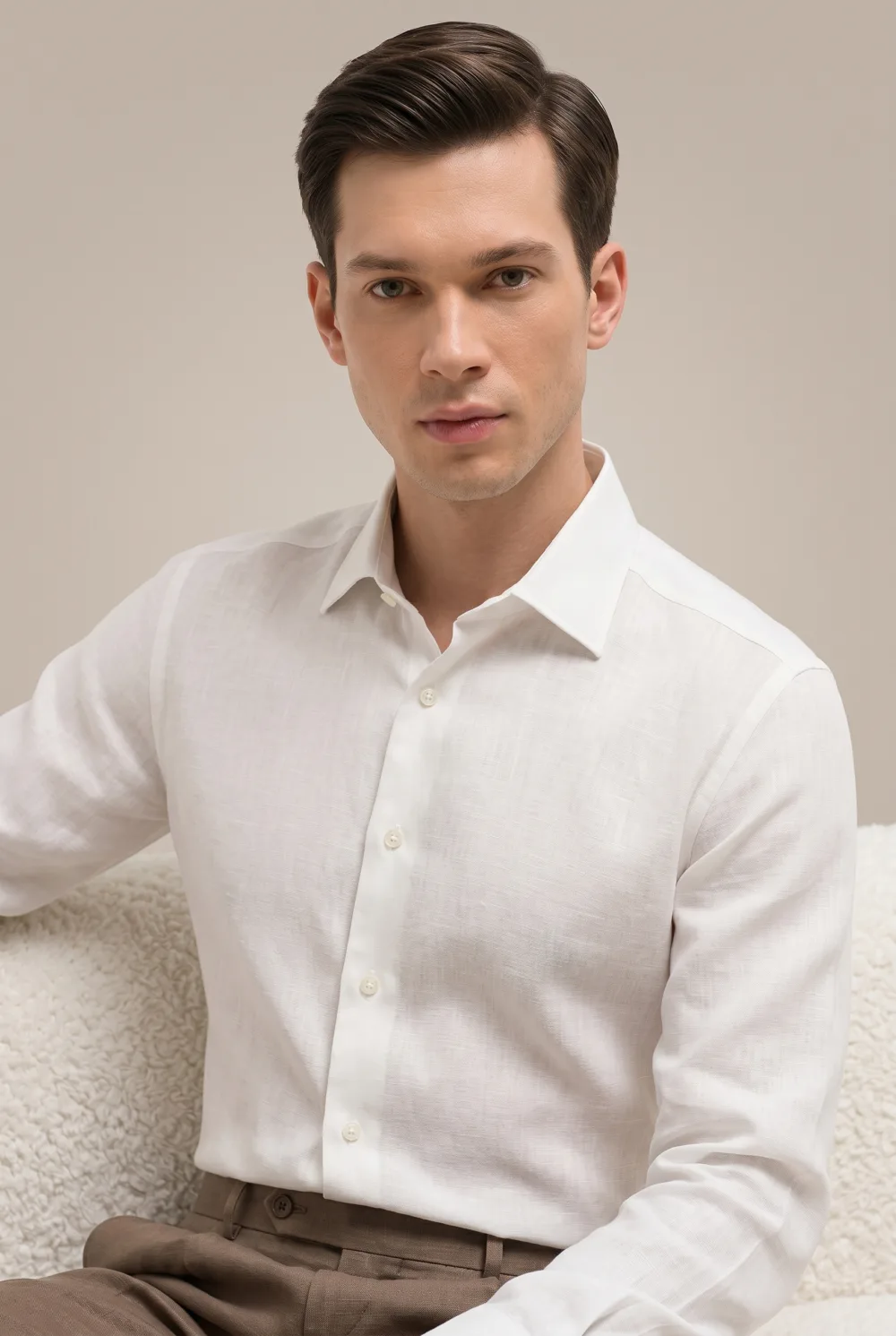 60 LEA Linen
Derris Supreme Imperium — Pearl White
Crisp white linen with a relaxed casual fit — moves easily between smart-casual and weekend ease.
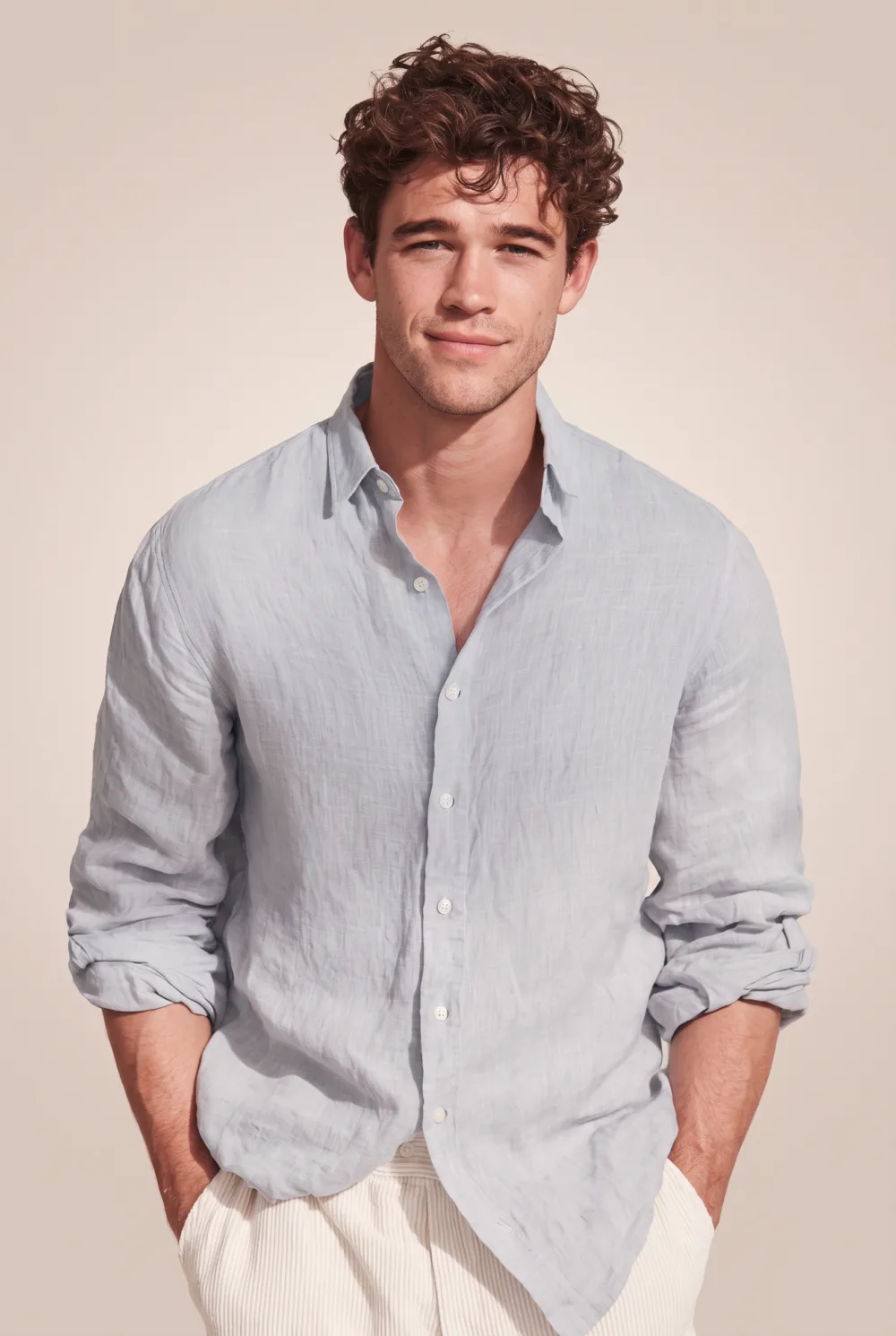 60 LEA Linen
Derris Supreme — Powder Blue
Breezy coastal elegance from heritage Irish mills, with natural cooling comfort built in.
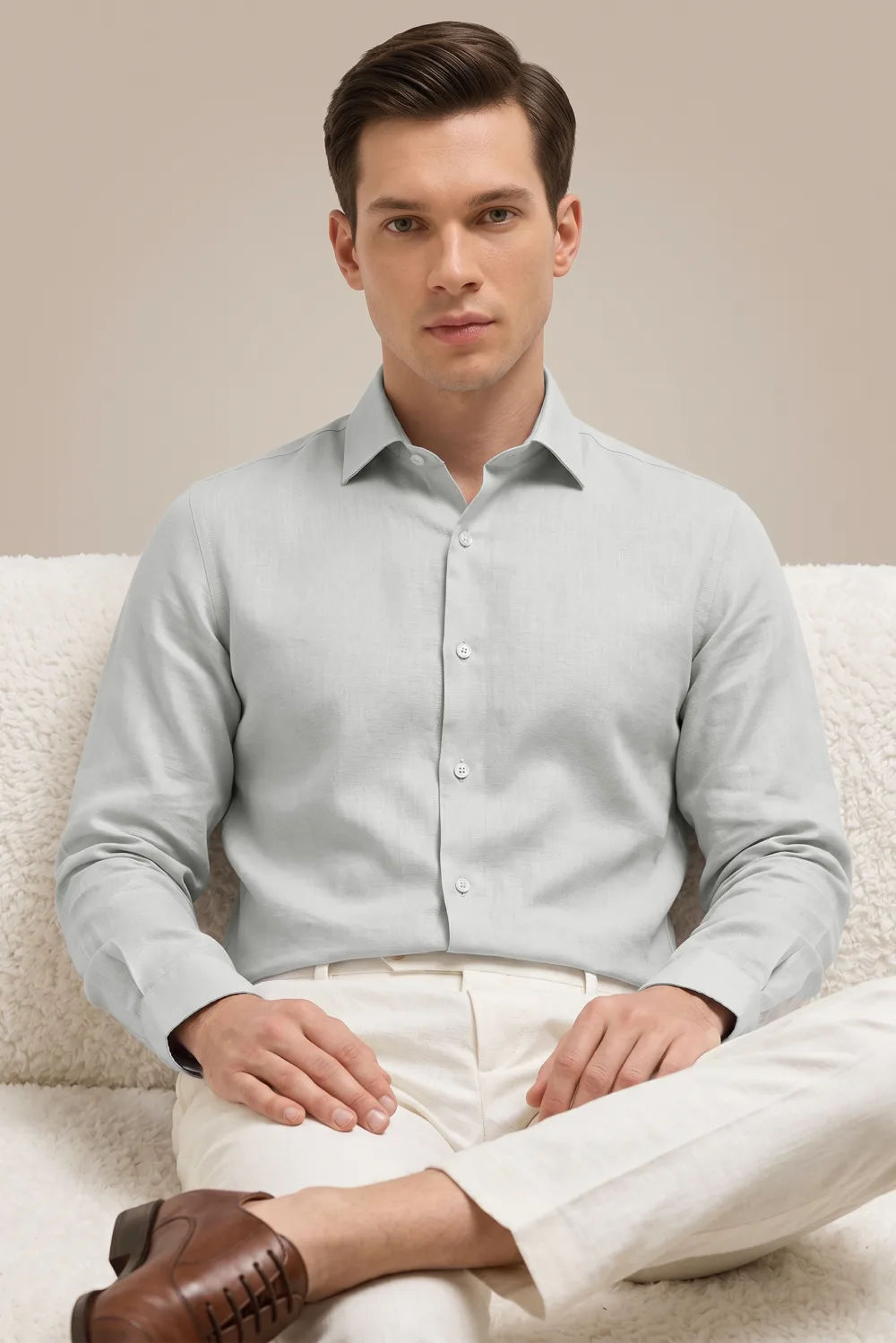 60 LEA Linen
Derris Supreme Royal — Light Grey
A sleek, monochromatic tone from certified 60 LEA Irish flax — refined and easy to dress up or down.
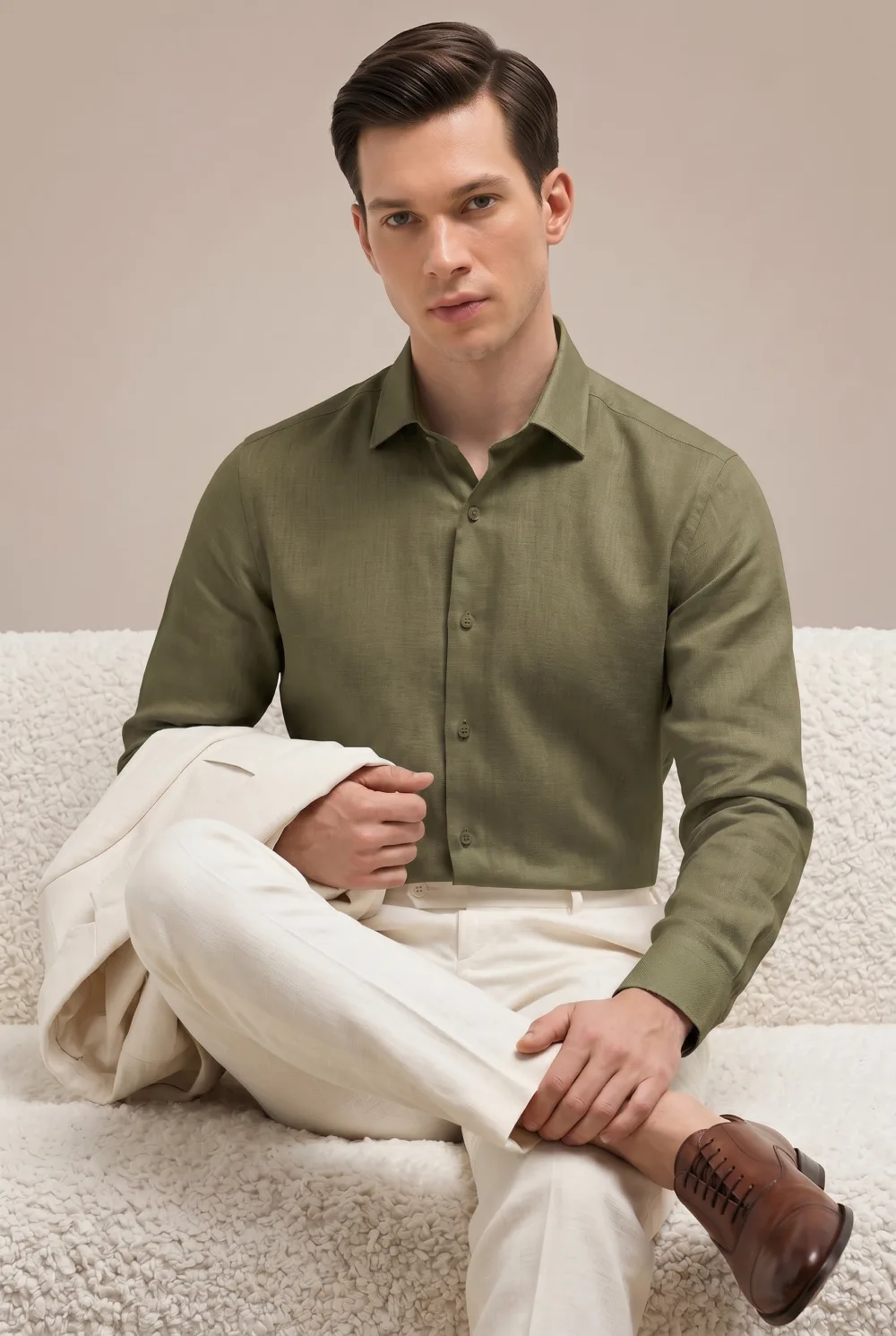 60 LEA Linen
Derris Supreme Prestige — Deep Olive
Distinguished military-chic tone with natural cooling comfort — a strong resort-wardrobe pick.
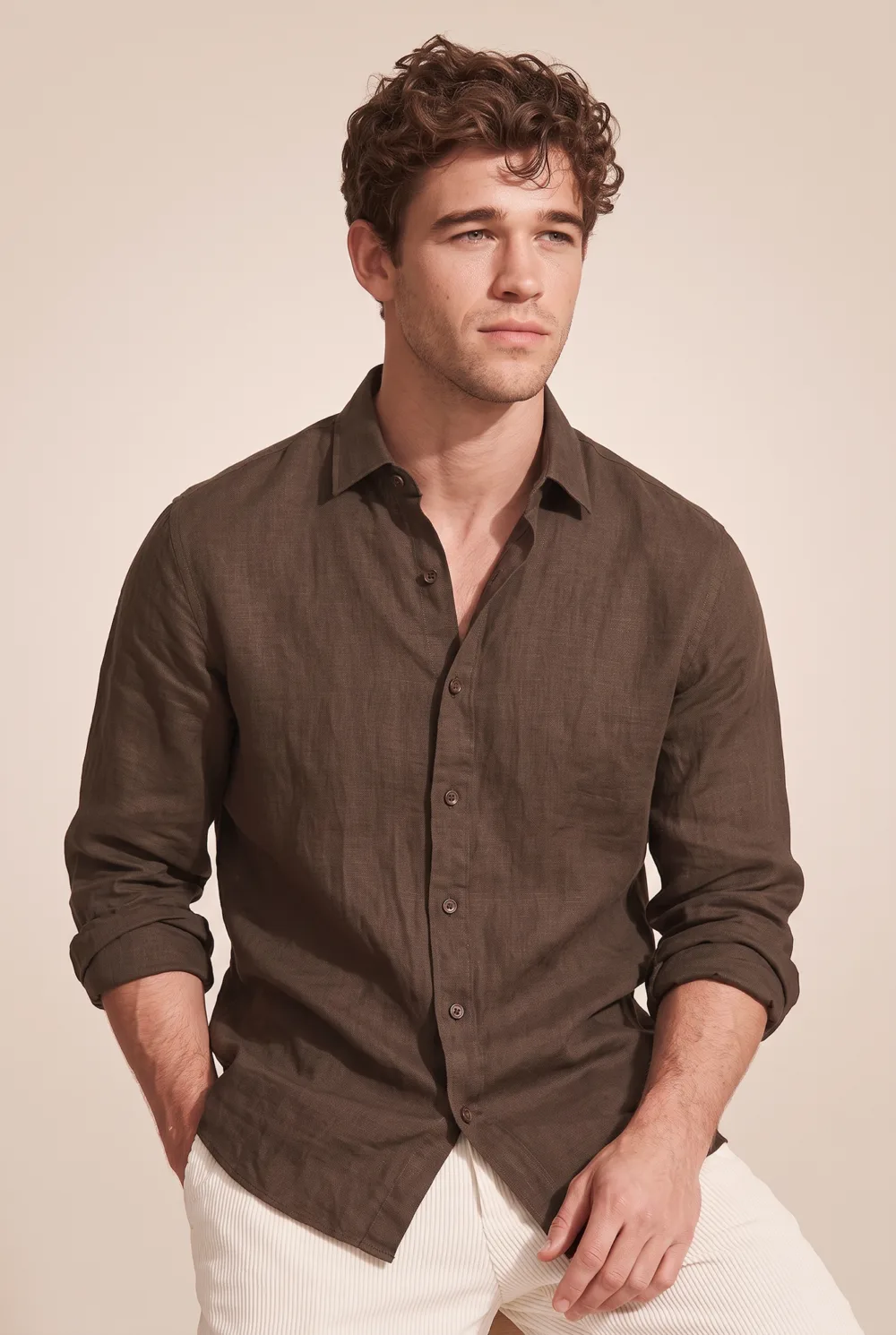 60 LEA Linen
Derris Supreme — Carafe Brown
Deep, espresso-inspired shade from 100% European 60 LEA flax — moody elegance for evenings.
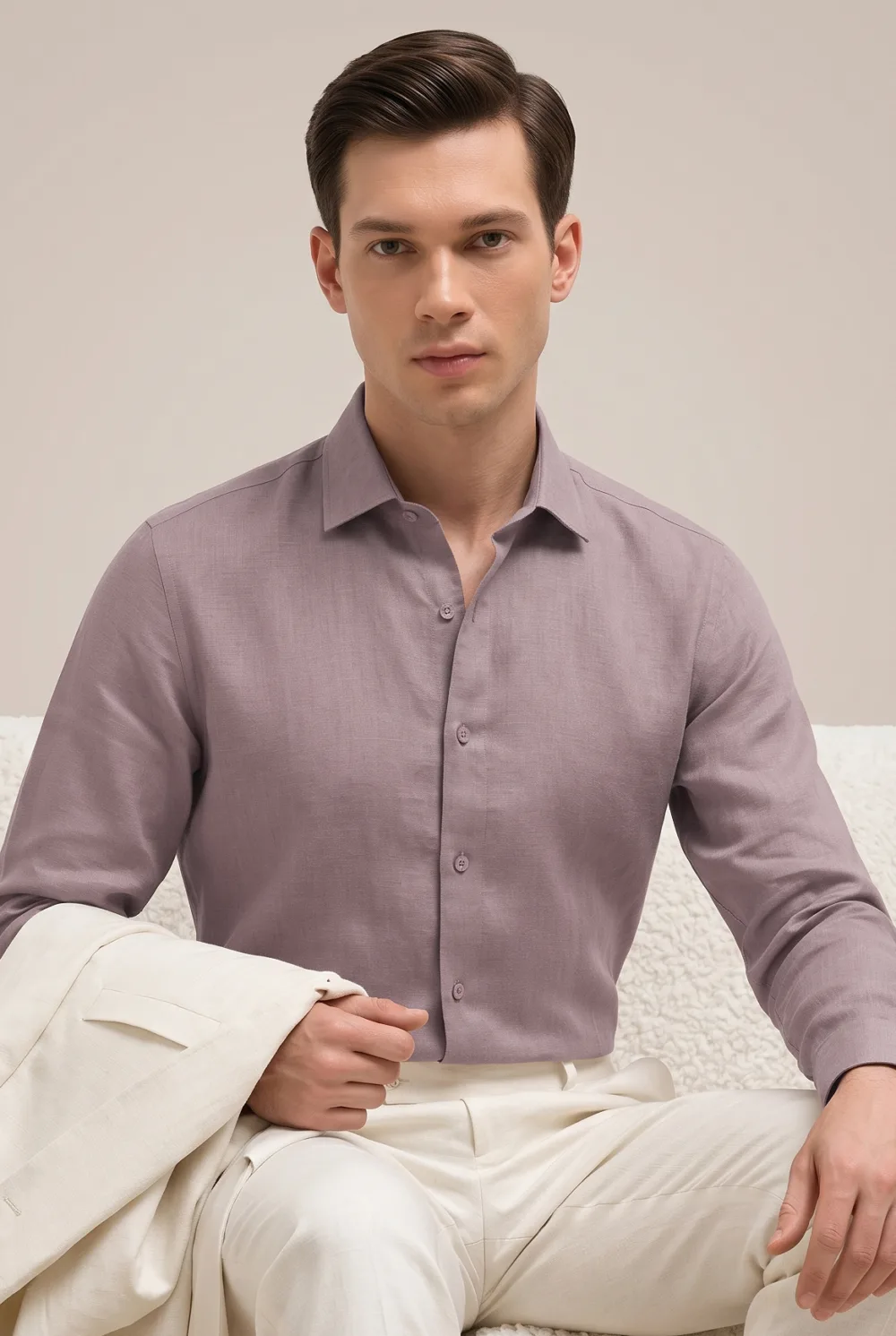 60 LEA Linen
Derris Supreme Heritage — Muted Mulberry
A refined dusty mulberry shade with exceptional cooling breathability and a modern colour profile.
Cotton Shop cotton shirts — Giza, snow cotton & wrinkle-free
For structured, low-maintenance, office-ready fabric, here’s where to start across Derris’s cotton range.
Derris Supreme Imperial — Sage Green
Extra-long-staple Egyptian Giza cotton in a subtle sage tone — silky softness and natural lustre.
Derris Supreme Monarch — Soft Lilac
Featherlight snow cotton for cloud-like softness with clean, minimalist everyday style.
Derris Supreme Imperium — Navy Blue
Advanced crease resistance meets deep navy texture — non-iron convenience, executive presence.
Still not sure which one to pick?
Browse the full Derris collection — linen and cotton, side by side — and choose by fit, colour and occasion.
Shop Linen Shop All ShirtsLinen vs cotton shirts: full comparison table
Here’s the side-by-side breakdown, in the order it actually matters when you’re picking a shirt to wear, not just to admire on a hanger.
| Property | Linen | Cotton |
|---|---|---|
| Fibre source | Stem of the flax plant | Seed hair of the cotton plant |
| Feel | Slightly crisp, textured, softens with every wash | Smooth and soft from the first wear |
| Breathability | Excellent — open, airy weave | Good — denser, tighter weave |
| Weight on skin | Light and airy | Soft, medium weight |
| Wrinkling | Creases easily — part of its natural character | Resists creasing better; can be treated wrinkle-free |
| Strength when dry | Very high | Good |
| Strength when wet | Gets stronger — a rare, useful property | Slightly stronger, but less dramatic |
| Drying speed | Fast | Slower — holds moisture longer |
| Ironing effort | More effort, or embrace the natural crease | Less effort, especially wrinkle-free finishes |
| Best worn for | Summer, resort wear, travel, business casual | Office, formal wear, interviews, everyday use |
| Typical price position | Higher — more labour-intensive to produce | More accessible, wide price range |
Which fabric is cooler? Linen vs cotton for Indian weather
In a hot, humid Indian summer, this is usually the deciding question — and the answer comes down to two things: how much air moves through the fabric, and how fast it dries once it gets damp.
Because flax fibres are stiff and irregular in shape, they simply can’t be packed as tightly together as smooth cotton fibres during weaving. That leaves more open space in the weave, so noticeably more air passes straight through a linen shirt compared to a cotton shirt of similar weight. That constant airflow keeps a thin cushion of moving air between your skin and the fabric — which is exactly what carries heat away from your body.
Linen Wicks and dries fast
- Hollow fibre core pulls sweat away from the skin quickly
- Doesn’t cling to the body, even when damp
- Dries in roughly half the time of a cotton shirt
Cotton Absorbs, then holds on
- Can absorb more total moisture by weight than linen
- Holds that moisture inside the fibre instead of releasing it
- Feels heavier and stays damp longer once soaked
The practical takeaway: for a Delhi or Jhansi-style dry summer afternoon, a business trip through humid coastal cities, or a full day of travel, linen keeps you noticeably more comfortable. For a climate-controlled office or a mild-weather day, cotton performs perfectly well and looks sharper doing it.
Which shirt lasts longer — linen or cotton?
This one comes down to fibre length. A single cotton fibre is short — usually between 1 and 6 centimetres — so spinning it into yarn requires twisting together thousands of short pieces, each joint a potential weak point. Flax, on the other hand, forms long “technical fibre” bundles that can run anywhere from 25 centimetres to well over a metre. Fewer joints per length of yarn means fewer places for the fabric to fray or snap.
Linen also has an unusual party trick: unlike almost every other natural fibre, it actually gets stronger when wet. Water works its way into the fibre and lets the internal structure realign more efficiently under stress — which is a big part of why genuine linen textiles have survived in archaeological digs for thousands of years, and why a well-made linen shirt can realistically stay in rotation for 5 to 10 years or longer with basic care.
Cotton is still a dependable, durable fabric for years of regular wear — it simply softens and thins out a little faster under heavy, repeated washing compared to linen.
Why does linen wrinkle more than cotton?
It comes down to elasticity. A cotton fibre can stretch quite a bit before it breaks, which means it can bend and spring back into shape — that’s why a cotton shirt resists visible creasing reasonably well on its own. Flax fibre is stiffer and far less stretchy, so once it’s folded, sat in or crushed, it doesn’t spring back the same way. The crease stays.
This isn’t a flaw — it’s linen being honest about being a natural, untreated fibre. A textured, slightly creased linen shirt at 6 PM is actually a sign of genuine, good-quality flax, not poor manufacturing. If a “linen” shirt looks perfectly flat all day, it’s very likely been heavily blended or chemically treated.
That said, if you want a completely fuss-free, sharp-all-day option, that’s exactly the gap that treated wrinkle-free cotton shirts are built to fill — the cotton fibre is engineered to resist creasing through a full workday and repeated washes, cutting your ironing time to almost nothing.
What is 60 LEA linen? (Thread count vs LEA count, explained simply)
This is the one part of fabric shopping that trips up almost everyone — and most articles skip it entirely. Here’s the short version.
Cotton quality is usually marketed by thread count — literally the number of threads woven into one square inch of fabric. That works for cotton because its round, uniform fibres can be packed tightly and counted.
Linen doesn’t play by that rule. Flax yarn is naturally uneven in thickness, so instead it’s graded by LEA — a measurement invented in the linen mills of Belfast that describes how fine the yarn is before it’s ever woven into cloth. One LEA equals the number of 300-yard lengths of yarn that can be spun from a single pound of prepared flax fibre. So a 60 LEA yarn yields 18,000 yards from that same pound — a much finer, thinner thread than a coarser 30 LEA yarn from the same amount of raw fibre.
| LEA count | Yarn feel | Typically used for |
|---|---|---|
| 20–30 LEA | Coarse, heavy, rustic | Trousers, heavy jackets, upholstery |
| 30–45 LEA | Medium weight, visible texture | Casual, everyday shirts |
| 60 LEA | Fine, smooth, crisp yet breathable | Premium shirting — the sweet spot |
| 80–100+ LEA | Very fine, silky, delicate | Luxury occasion wear, easily damaged in daily use |
60 LEA is widely considered the sweet spot for shirting because it balances two things that usually trade off against each other: a refined, soft-against-the-skin feel, and enough strength to survive years of Indian heat, sweat and regular washing. Anything much finer starts getting sheer and fragile; anything coarser starts feeling like sackcloth.
This is exactly why Derris builds its linen shirt collection around genuine 60 LEA Burgoyne Irish linen — a 100-year-old linen house whose fabric also supplies international luxury fashion houses — instead of chasing a cheaper, coarser yarn or an unnecessarily delicate one.
What makes Egyptian Giza cotton different from regular cotton?
Not all cotton is created equal, and this is where “staple length” comes back into the picture — the same idea we used for linen, applied to cotton fibre.
Ordinary cotton is short-staple: fibres around 1–3 cm long, spun into yarn with plenty of joins. Egyptian Giza cotton is extra-long-staple — its fibres are noticeably longer, so a spinner needs far fewer joins to build the same length of yarn. Fewer joins means a smoother, stronger, more lustrous thread, which is exactly why a Giza cotton shirt feels silkier against the skin and resists pilling — those small fuzzy balls that form on cheaper cotton after a few washes — far better than regular cotton.
Derris sources its Giza cotton from Soktas, a Turkish mill trusted by luxury fashion houses and Savile Row tailors, and uses it for shirts designed for executive office wear and formal occasions where the fabric itself needs to do some of the talking. You can see it in the Sage Green Egyptian Giza shirt — smooth, subtly lustrous, and built for daily formal rotation.
Linen vs cotton shirts: which is better for each occasion?
Instead of picking one fabric forever, most well-dressed men simply match the fabric to the occasion. Here’s a practical cheat sheet.
| Occasion | Recommended fabric | Why |
|---|---|---|
| Boardroom meetings, interviews | Cotton (Giza or wrinkle-free) | Crisp, structured, holds its shape all day |
| Regular office days | Cotton or wrinkle-free cotton | Low maintenance, professional, all-season |
| Business-casual Fridays | Linen or textured cotton | Relaxed but still put-together |
| Peak summer, any setting | Linen | Maximum breathability, dries fast |
| Travel and weekend trips | Linen | Packs light, breathes well, dries quickly if hand-washed |
| Evening or festive occasions | Linen or Giza cotton | Natural sheen and texture read as elevated |
How to care for linen and cotton shirts
| Step | Linen | Cotton |
|---|---|---|
| Washing | Gentle cycle, mild detergent, cool water | Mild detergent, gentle cycle |
| Drying | Hang dry, avoid aggressive wringing | Remove promptly if wrinkle-free; avoid prolonged high heat |
| Ironing | Iron while still slightly damp for a crisp finish | Iron on medium heat; wrinkle-free needs little to none |
| Bleach | Avoid | Avoid, especially on Giza cotton |
| Storage | Cool, dry place, on a hanger | Cool, dry place, on a hanger |
Always check the garment’s individual care label first — it accounts for any specific finishing or blend used on that particular shirt.
So, which one should you actually buy?
Choose linen if…
- You live somewhere hot, or you’re buying for peak summer
- You travel often and want something light and fast-drying
- You like a relaxed, textured, lived-in look
- You want a shirt that gets better with every wash
Choose cotton if…
- You need a crisp, structured look for the office
- You want low-maintenance, minimal ironing
- You’re dressing for interviews or formal meetings
- You want one fabric that works in every season
Honestly? Most well-built wardrobes carry both. Cotton for the five office days a week, linen for the weekend and the two hottest months of the year. That’s exactly how the Derris shirt collection is built — so you don’t have to choose just one.
Which fabric is more sustainable — linen or cotton?
Flax, the plant linen comes from, is a genuinely low-input crop. It grows well on natural rainfall with very little irrigation and needs far fewer pesticides than conventional cotton, and modern enzyme-based processing has made fibre extraction considerably cleaner than it used to be. Cotton is more water- and input-intensive to grow, though responsibly farmed and organic cotton meaningfully narrows that gap.
The bigger picture: both are natural, biodegradable, plant-based fibres — a genuinely better choice for the planet than any polyester or synthetic blend, whichever one you end up choosing for your next shirt.
Frequently asked questions
Is linen or cotton better for Indian summers?
Linen is better for peak summer heat because its open weave lets far more air pass through and it dries almost twice as fast as cotton once it gets damp. Cotton is still a solid all-rounder for mild heat and air-conditioned days.
What does 60 LEA mean in a linen shirt?
LEA measures how fine the linen yarn is before weaving — one LEA equals a 300-yard length spun from one pound of flax. 60 LEA is the widely recognised sweet spot for shirting: fine and soft enough to feel refined, yet strong enough for years of regular wear and washing.
Will my linen shirt shrink after washing?
A small amount of shrinkage is normal in the first few washes, which is why linen shirts are usually cut with a little extra room. Wash in cool water, avoid high heat, and hang dry to keep the fit consistent.
Why does my cotton shirt feel heavy when I sweat?
Cotton fibres absorb a large amount of moisture and hold it deep inside the fibre, so a sweat-soaked cotton shirt gets heavier and stays damp against the skin. Linen absorbs slightly less but wicks it to the surface fast, so it dries quicker and feels lighter.
Can I wear a linen shirt to a formal office?
Yes, in a solid colour and a tailored fit, linen works well for business-casual offices, especially in summer. For strict boardroom formality or interviews, a crisp cotton or wrinkle-free shirt still holds its shape better through a long day.
How many years does a good linen shirt last?
A well-made 100% linen shirt, cared for properly, can comfortably last 5 to 10 years or longer because linen fibres actually gain strength when wet and resist fraying better than cotton over repeated washes.
Is Egyptian Giza cotton better than regular cotton?
Giza cotton uses extra-long fibres, which means fewer joins in the yarn and a smoother, softer, shinier finished shirt with much better resistance to pilling compared to ordinary short-staple cotton.
Do wrinkle-free cotton shirts actually work?
Yes. Wrinkle-free finishing treats the cotton fibre so it resists visible creasing through a full workday and multiple washes, cutting down ironing significantly while keeping the fabric breathable.
Which fabric is more expensive, linen or cotton?
Linen generally costs more because flax farming and fibre extraction take more time and labour than cotton. Within cotton, long-staple varieties like Egyptian Giza cost more than ordinary cotton for the same reason — more refined fibre, more processing.
The bottom line
Linen and cotton aren’t really rivals — they’re two different tools for two different jobs. Linen is the fabric you reach for when the temperature climbs and comfort matters most. Cotton is the fabric you reach for when structure, polish and low maintenance matter most. Once you know that, the “linen vs cotton shirts” question basically answers itself for every single day of the year.
Every Derris shirt is built from one of these two fabrics at their best — 60 LEA Burgoyne Irish linen or Soktas Egyptian Giza and premium cotton — cut with the same tailoring standard across both. Explore the full collection and build a wardrobe that’s ready for every season, not just one.