
Linen is one of the oldest and most respected textiles in human history. Celebrated for its exceptional breathability, high moisture-wicking capacity, and distinct organic texture, it has long been the gold standard for warm-weather dressing. Welcome to our ultimate pure linen fabric guide, where we analyze fabric composition, weave density, and technical specifications so you can make informed wardrobe choices. Selecting the right fabric composition requires a balance between traditional performance, structure, and ease of maintenance.
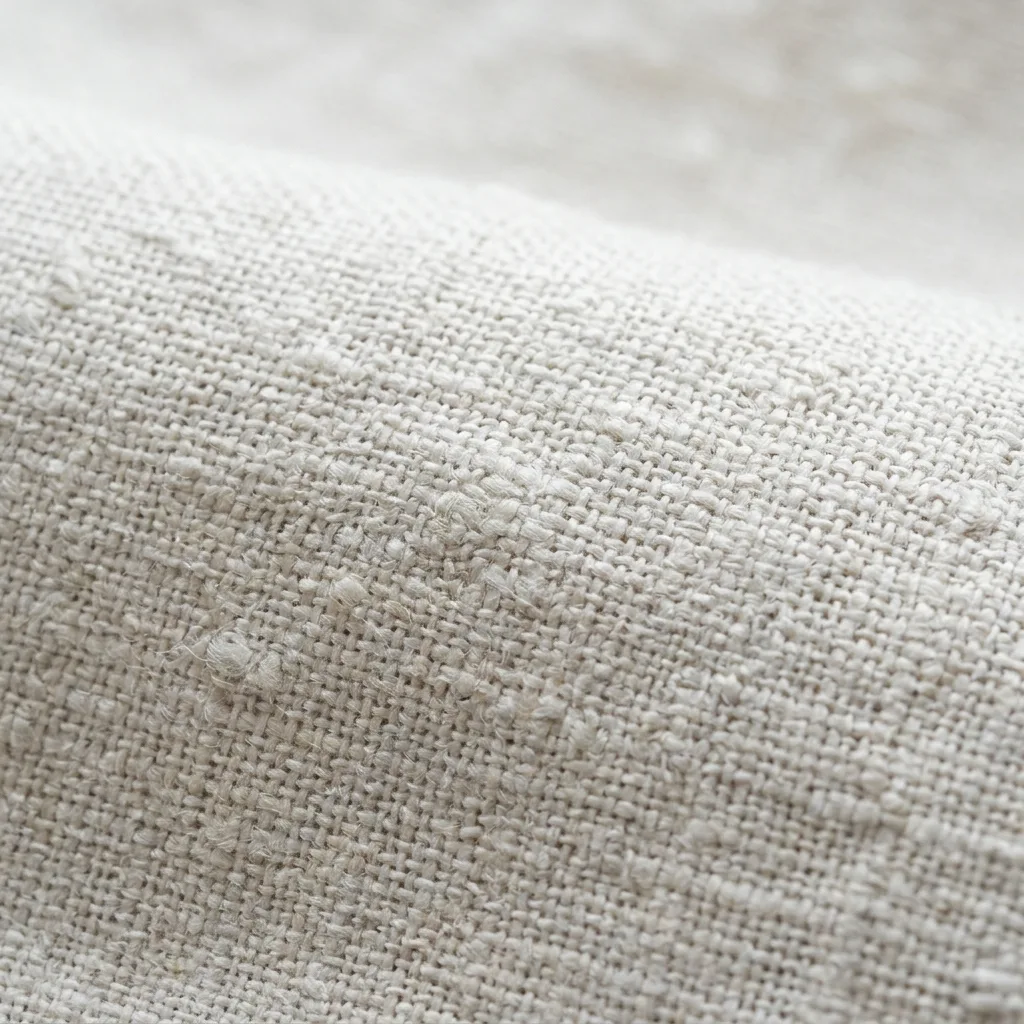
For the modern gentleman building a premium wardrobe, understanding the technical differences between 100% pure linen and various blends is essential. In this pure linen fabric guide, we dive deep into the science of linen fabric, analyzing how yarn weight, density, and fiber composition affect your daily wearing experience.
1. Is 100% Linen Better Than Linen Blend Shirts?
From a textile performance standpoint, 100% pure linen is unmatched in hot and humid conditions. Pure linen fibers, harvested from the stalk of the flax plant (Linum usitatissimum), possess a hollow core (lumen) and a highly crystalline structure. This cellular anatomy allows the fabric to absorb up to 20% of its dry weight in moisture before feeling damp, while drying significantly faster than cotton.
Linen blends (typically combined with cotton, viscose, or silk) are designed to modify these properties. While a blend may crease slightly less or offer a softer touch straight off the rack, it dilutes the natural heat-dissipating performance of pure flax. If your primary goal is absolute cooling efficiency and the classic, structured look of natural flax, pure linen shirts remain the superior choice.
2. Are Blended Linen Shirts Better Than 100% Linen?
Whether blended linen is “better” depends on your specific lifestyle needs and the occasion. For example, a linen-cotton blend combines the crisp structure of flax with the softness and elasticity of cotton. This results in a shirt that is easier to iron and retains less severe creasing throughout a busy workday, making it highly practical for a business setting.
Alternatively, blending linen with Tencel or Lyocell creates a fabric with a fluid, silky drape. However, these blends lose the organic “slubby” texture and structure that makes premium pure linen so visually distinctive. For casual wear, pure linen is irreplaceable; for structured daily wear, blends offer distinct utility. To learn how to spot inferior fabrics, read our guide on how to identify high quality linen shirts.
3. Linen vs Cotton Shirts: Which Should You Buy?
The choice between linen and cotton comes down to the science of their respective fibers. Cotton fibers are flat, twisted ribbons that tend to trap heat and hold onto moisture longer, making them excellent for insulation but less efficient in high humidity. Flax fibers are straight, thick, and smooth, allowing air to flow freely through the weave.
Furthermore, linen is roughly 30% stronger than cotton. It contains natural pectins that bind the fibers together, making it highly resistant to abrasion and stretching. While a fine cotton shirt is perfect for structured corporate environments, a high-quality white linen shirt offers superior temperature regulation and durability for smart-casual wear.
4. What Thread Count Matters in Linen Shirts?
Unlike cotton, where thread count (threads per square inch) is a primary marker of quality, the linen industry uses yarn count (measured in LEA) and fabric weight (measured in GSM). Flax fibers are naturally irregular and inelastic, making thread count an inaccurate measurement of breathability or quality.
For premium shirting, look for a yarn count of 60 LEA. LEA measures the length of yarn spun from one pound of flax. A count of 60 LEA yields a highly refined, lightweight yarn that can be woven into a breathable fabric without compromising its structural integrity. Lower counts (e.g., 25–40 LEA) yield thicker, heavier yarns better suited for trousers or heavy overshirts.
5. What’s the Ideal Weight for a Quality Linen Shirt?
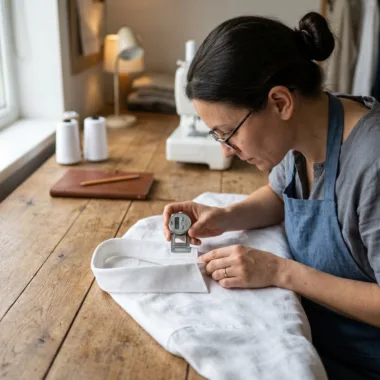
The weight of linen is measured in Grams per Square Meter (GSM). For high-quality men’s shirts, the ideal weight ranges between 110 GSM and 145 GSM. This range represents the perfect textile balance.
Fabric woven below 110 GSM is too thin and transparent, making it prone to tearing at stress points like the armpits and side seams. Conversely, fabric above 150 GSM behaves more like a jacket or canvas material, trapping body heat. A weight of 120–130 GSM ensures the shirt drape remains elegant and durable while maintaining its cooling properties.
6. Linen Shirt Transparency: How to Choose the Right Density
Many men hesitate to wear white linen because of transparency concerns. Fabric transparency is governed by two factors: yarn count (LEA) and weaving density. Cheap linen shirts often use lower-quality yarn spun loosely, resulting in visible gaps between the warp and weft threads.
To ensure opacity, select a shirt woven from 60 LEA yarn with a balanced weave density. This combination results in a fabric that is light and breathable but prevents see-through issues under direct light. Investing in a dense, premium weave allows you to wear white linen with complete confidence, without needing an undershirt.
7. How See-Through Are White Linen Shirts?
A white linen shirt’s see-through nature depends entirely on the fiber selection and processing. Cheaper white linen shirts use dry-spun, short-staple fibers that result in uneven thickness and a loose, irregular weave. These gaps allow light to pass through easily, making the shirt highly transparent.
A premium white linen shirt made from long-staple European flax, wet-spun and tightly woven, minimizes this issue. Under normal lighting, a premium white linen shirt remains opaque while allowing heat to escape, offering pristine visual appeal and cooling performance.
8. Best Colors for Linen Shirts That Don’t Show Through
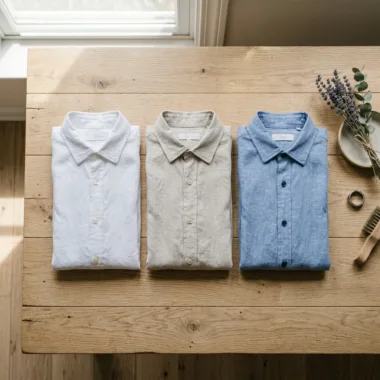
If you want to avoid transparency altogether while wearing linen, color choice is key. While white requires a high-quality dense weave, solid medium-to-dark tones are naturally opaque. Colors like navy blue, olive green, charcoal grey, and earth tones (like tan or stone brown) completely eliminate transparency issues.
For lighter colors, pastels like a premium powder blue linen shirt are excellent alternatives to white. Powder blue scatters light more effectively than white, providing a clean, fresh summer aesthetic with significantly less transparency, making it highly versatile for day-to-night transitions.
9. Why Is Pre-Washed Linen Better?
Pre-washing is a critical step in the textile finishing process. Flax fibers naturally shrink by up to 5% to 8% during their initial contact with water. If a manufacturer cuts and sews a shirt from raw, unwashed linen, the garment will shrink dramatically after your first home wash, ruining the fit.
Furthermore, raw linen is naturally stiff due to pectins and sizing starches used to strengthen the yarn during weaving. Pre-washing (especially enzyme washing) breaks down these starches and relaxes the fibers, ensuring the shirt fits correctly and feels soft from the moment you first put it on. For proper care instructions, view our guide on how to wash linen shirts.
10. Do Premium Linen Shirts Wrinkle Less?
It is a common misconception that high-quality linen does not wrinkle. All pure linen wrinkles because flax fibers lack elasticity. However, the nature of the wrinkles differs significantly between quality tiers.
Premium linen, made from long-staple flax and wet-spun, has a supple hand-feel and a heavy drape. It creases in soft, rolling folds that follow the body’s natural movement. Cheap linen, woven from short-staple tow, is stiff and crinkles in sharp, papery, and messy lines. The rolling creases of premium linen are a signature of luxury, not a defect.
Conclusion
Understanding the science of linen fabric allows you to build a wardrobe that combines comfort with elegant style. While linen blends offer convenience, 100% pure linen remains the gold standard for hot-weather performance. By selecting the right yarn count (60 LEA), fabric weight (110–145 GSM), and weave density, you can enjoy the cooling properties of flax with complete confidence.
Ready to upgrade your wardrobe? Explore our curated range of pure linen shirts to find your perfect summer fit.

%20(320%20x%20160%20px)%20(2).png)