
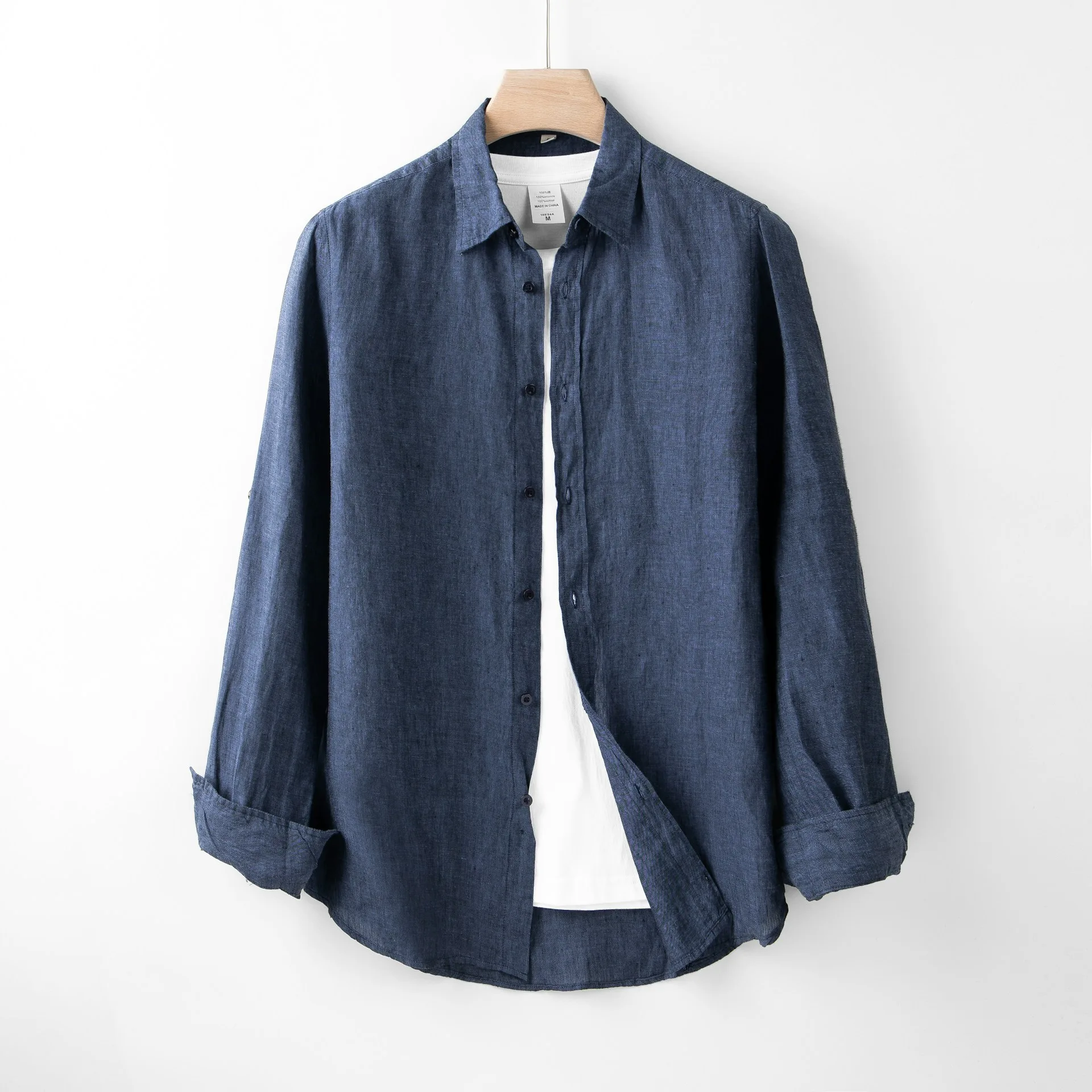
Every brand says “premium 100% linen.” Almost none tell you the LEA count, the GSM, or how the flax was retted — the three numbers that actually decide whether your shirt breathes, drapes, and survives fifty washes. This guide ranks the top 10 linen shirt brands in India on those numbers, not adjectives.
If you’ve searched for the top 10 linen shirt brands in India before, you’ve probably landed on lists that read like press releases — a logo, a one-line compliment, a “shop now” button. That’s not a buying guide, it’s a catalogue. This one is built differently. We pulled apart the actual fabric specifications behind India’s best-known linen shirt brands — flax origin, LEA count, GSM, retting method, sizing range — and lined them up against what a direct-to-consumer manufacturer like Derris can offer when it cuts out retail markup entirely. By the end, you’ll know exactly what to check on a product page before you pay for “premium linen,” and which of the top 10 linen shirt brands in India actually deliver on that promise at the price they charge.
Quick answer: the top 10 linen shirt brands in India
Jump straight to any brand, or keep reading for why each one earned its spot.
- Linen Club — the original, still the largest integrated linen manufacturer in the countryBest for: brand trust and nationwide retail access
- Derris — 60 LEA Burgoyne Irish linen, D2C pricing, sizes up to 5XLBest for: the same fabric grade as artisanal labels, at a direct-to-consumer price
- Linen Trail — slow-fashion, hand-finished, 44–60 LEA European flaxBest for: artisanal craftsmanship and small-batch design
- Andamen — engineering-led fit, blends linen with rare cottonsBest for: Indian-body tailoring and premium fabric variety
- FabIndia — handloom linen with Indian textile heritageBest for: ethnic-western fusion and natural dyes
- Yell — minimalist, drape-focused linen separatesBest for: understated, editorial-style dressing
- Nicobar — relaxed, travel-ready lifestyle linenBest for: resort and weekend wear
- Louis Philippe — corporate linen-cotton blendsBest for: executive, French-inspired formalwear
- Marks & Spencer — global sizing and consistent QCBest for: larger frames and dependable fit
- Rare Rabbit — bold prints, oversized silhouettesBest for: fashion-forward, statement linen
What Actually Makes a Linen Shirt Premium?
Before ranking brands, it helps to know what you’re actually paying for. Every shirt in this list calls itself “pure linen” or “premium linen” — but linen quality is decided by three measurable things, not by the word “luxury” on a swing tag.
What Is LEA Count, and Why Should You Check It Before Buying?
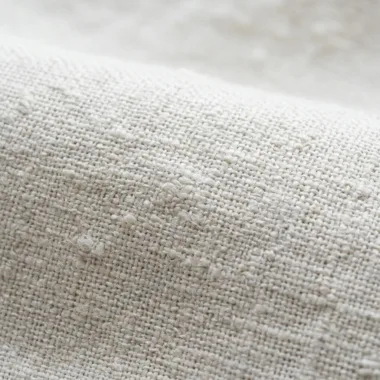
LEA is the traditional unit that measures how fine a linen yarn is. A higher LEA count means a thinner, finer yarn spun from longer flax fibres; a lower LEA count means a thicker, coarser thread. For menswear shirting built for a tropical climate, industry practice treats a 44 to 60 LEA range as the sweet spot: fine enough for a soft hand-feel and real breathability, but dense enough that the fabric doesn’t turn see-through or flimsy on the body.
~30 LEA
60 LEA
80+ LEA
What GSM Should a Linen Shirt Be for Indian Weather?
GSM (grams per square metre) tells you how dense and heavy the weave is. For Indian summers, a range of roughly 110–135 GSM is considered ideal — light enough for the fabric to move air across skin, heavy enough to hold a collar’s shape and a proper button placket instead of collapsing into limp cloth by lunchtime. A shirt sitting around 120–125 GSM is usually the most versatile: cool enough for May in Delhi, structured enough for a client meeting.
Does Dew-Retted vs Water-Retted Flax Actually Matter to You?
“Retting” is the process that separates linen fibre from the woody flax stalk. Dew retting — leaving pulled flax stalks in the field for natural sun, rain and dew to break down the pectins — is the slower, gentler, more water-efficient method used by most heritage European and Irish flax suppliers, and it tends to produce a softer, more consistent fibre than tank-based water retting. You won’t see “dew-retted” printed on most Indian shirt labels, but it’s usually implied when a brand names a specific European or Irish flax mill as its source, rather than simply writing “imported linen.”
Why Do Some Linen Shirts Shrink Badly After the First Wash?
Raw, untreated linen can shrink by 6% or more the first time it meets a washing machine. Brands that pre-wash their fabric before cutting and stitching avoid this almost entirely — a properly pre-washed linen shirt should show under 2% dimensional change over its life. If a shirt has never mentioned pre-washing or fabric treatment anywhere on its product page, assume it hasn’t been done, and size up slightly or hand-wash the first cycle.
The one-line filter
Before buying any linen shirt in India, look for three things on the product page: the LEA count (44–60 is the target), the fabric source (a named mill beats “imported fabric”), and any mention of pre-washing. If a brand won’t tell you any of the three, that silence is itself useful information.
Top 10 Linen Shirt Brands in India — Compared at a Glance
Here’s how the top 10 linen shirt brands in India stack up on the factors that matter most before you spend money — fabric source, indicative price for a full-sleeve pure linen shirt, who each brand actually suits, and how wide their sizing goes.
| Rank | Brand | Fabric Source | Approx. Price (Full-Sleeve, Pure Linen) | Best For | Fit Range |
|---|---|---|---|---|---|
| 1 | Linen Club | European flax (France/Belgium), CELC-certified | ₹1,500 – ₹7,500 | Nationwide retail trust | Standard retail sizing |
| 2 | Derris | 60 LEA Burgoyne Irish linen, direct from the mill | ₹2,495 – ₹2,995 | Same-grade linen without retail markup | XS – 5XL, Slim & Regular |
| 3 | Linen Trail | 44–60 LEA European flax, pre-washed | ₹4,399 – ₹6,199 | Artisanal, hand-finished pieces | Standard, size-curated |
| 4 | Andamen | European linen + Giza cotton blends | ₹4,000 – ₹7,500 | Indian-body engineered fit | Standard to XL |
| 5 | FabIndia | Handloom linen, natural dyes | ₹1,499 – ₹3,199 | Ethnic-western, artisanal aesthetic | Standard, broad range |
| 6 | Yell | European linen, minimal construction | ₹3,800 – ₹9,500+ | Quiet, editorial minimalism | Standard |
| 7 | Nicobar | Linen & linen-Cupro blends | ₹3,250 – ₹6,500 | Travel and resort wear | Up to 3XL |
| 8 | Louis Philippe | Linen-cotton blends, wrinkle-treated | ₹1,699 – ₹3,999 | Corporate formalwear | Standard, larger neck sizes available |
| 9 | Marks & Spencer | Global linen sourcing | From ₹1,499 | Larger frames, global consistency | Broad, inclusive sizing |
| 10 | Rare Rabbit | Textured linen, printed weaves | ₹3,499 – ₹5,999 | Bold, fashion-forward looks | Regular to oversized/plus |
Prices are indicative full-sleeve, 100% linen shirt price points compiled from brand websites and 2026 market research; brands revise pricing frequently, so confirm on the current product page before purchase. Derris pricing reflects live site pricing as of July 2026, inclusive of taxes.
Linen Club — Why Is It Still India’s Most Recognized Linen Brand?
Linen Club is the flagship brand of Jaya Shree Textiles, a subsidiary of the Aditya Birla Group, and it has genuine claim to the title of pioneer — it introduced European linen to the Indian market decades before “linen shirt” became a search term. Jaya Shree runs one of the largest integrated linen manufacturing setups in the country, sourcing raw flax exclusively from France and Belgium under CELC (European Confederation of Flax and Hemp) certification, which verifies the fibre’s European origin.
The brand’s biggest strength is reach: a dense retail footprint across Indian metros makes it easy to touch and try the fabric before buying, and the crisp, structured finish suits traditional formal dressing. The trade-off is that Linen Club sells through a large, multi-tier retail network — franchise stores, department store counters, multi-brand outlets — and each layer typically adds its own margin on top of manufacturing cost, which is part of why prices for a comparable LEA count can run noticeably higher than a brand selling directly to you online.
Best for: shoppers who want to physically try linen in-store and prefer a long-established, familiar name.
Price range: ₹1,500 – ₹7,500 depending on collection and LEA count.
Derris — Why Is This D2C Brand Closing the Gap on Legacy Linen Names?
Derris is a New Delhi-based menswear brand that makes exactly one category of clothing — men’s shirts — and puts all of its fabric and construction investment into that single category rather than spreading it across a full clothing line. Its team carries over 40 years of garment manufacturing experience, built by producing for established domestic and export apparel businesses before the Derris brand itself launched.
Its linen collection, the Derris Supreme range, is woven from genuine Burgoyne Irish Linen — a linen house founded in 1912 in Lurgan, Northern Ireland, that supplies fabric to international luxury fashion houses. Every shirt uses 60 LEA yarn, sitting right at the fine end of the 44–60 LEA gold-standard band discussed above, which is the same fineness bracket claimed by well-known artisanal linen labels priced well above ₹4,000.
The difference is the business model. Derris sells only direct-to-consumer, with no retail distributor, franchise store, or department-store counter taking a cut between the factory and your doorstep. That’s the practical reason a 60 LEA Burgoyne linen shirt from Derris is priced at ₹2,495–₹2,995, rather than the ₹4,000–₹7,500 territory that comparable Irish/European-flax shirts occupy elsewhere on this list. It’s also one of the few linen shirt brands in India offering sizing from XS through 5XL in both Slim and Regular fit, without pushing larger sizes into a separate “plus” sub-brand.
Shop the Derris Supreme 60 LEA Linen Collection
Best for: buyers who want heritage-mill 60 LEA linen without paying a retail-markup price, and anyone who needs sizing beyond standard XL/XXL.
Price range: ₹2,495 – ₹2,995 (MRP ₹3,995), inclusive of all taxes.
Linen Trail — Is It Worth Paying More for Hand-Finished Linen?
Headquartered in Thrissur, Kerala, Linen Trail is built around slow, artisanal construction rather than automated fast fashion. Founded in 2015, the brand uses 100% pure European flax woven at a 44–60 LEA count, and its garments go through a proprietary pre-washing process before cutting, which helps control shrinkage. Master artisans reportedly spend several hours hand-finishing a single shirt, and the catalogue leans into a curated, limited palette rather than a mass-produced grid of colours.
This craftsmanship shows up directly in price — Linen Trail sits in the ₹4,399–₹6,199 range, meaningfully above brands offering the same LEA count through a leaner, direct-to-consumer supply chain. If the hand-finishing and small-batch story matters to you as much as the fabric spec, it’s a legitimate premium to pay; if you’re optimising purely for LEA-count-per-rupee, it’s worth comparing against Derris’s identical 60 LEA fabric grade first.
Best for: shoppers who value slow-fashion craftsmanship and don’t mind paying for it.
Price range: ₹4,399 – ₹6,199.
Andamen — Does “Engineered Fit” Make a Real Difference?
Andamen, based in Gurugram, approaches shirt-making as an engineering problem: precise collar construction, shoulder blocks re-cut for the Indian torso, and detailed transparency about fabric sourcing. Alongside European linen for its summer range, the brand works with Egyptian Giza cotton and specialty Indian cotton fibres, which gives it more fabric variety than most linen-only competitors.
The trade-off is price and, in some SKUs, sizing depth — Andamen’s collections run ₹4,000–₹7,500, and its size range tends to stop at standard-to-XL rather than extending into plus sizes the way a few other brands on this list do.
Best for: buyers who want tailoring precision and fabric variety beyond pure linen.
Price range: ₹4,000 – ₹7,500.
FabIndia — Best for Handloom Character Over Corporate Crispness?
FabIndia takes a different route entirely: instead of chasing the sharp, structured European tailoring look, it leans into traditional Indian handloom textures, natural dyes, and techniques like Chikankari embroidery and Bagru printing. The result is an earthy, textured linen aesthetic that suits ethnic-western fusion dressing far better than boardroom formalwear.
Pricing is genuinely accessible — ₹1,499–₹3,199 — and the brand’s massive pan-India retail presence makes it easy to shop in person. If you want a crisp, structured formal linen shirt for office wear, though, this isn’t the brand built for that job.
Best for: ethnic-western fusion looks and natural, handloom textures.
Price range: ₹1,499 – ₹3,199.
Yell — Who Is This Minimalist Label Really For?
Founded in 2010, Yell built its identity around “quiet confidence” — no loud prints, no excess detailing, just a sharp focus on how the shoulder and drape hold their shape through a long day. It’s a strong pick if your personal style already leans minimal and you’re willing to pay for restraint done well; the brand sits at the top of this list’s price ladder, from ₹3,800 to upwards of ₹9,500 for structured linen outerwear pieces.
Best for: understated, editorial-style dressing.
Price range: ₹3,800 – ₹9,500+.
Nicobar — Best for Travel and Resort Wear?
Nicobar’s design language is built around ease — soft, coastal colour palettes and relaxed, anti-fit silhouettes that move well between a workspace and a weekend away. It uses pure linen and linen-Cupro blends, and its sizing runs a little wider than several competitors, extending up to 3XL. Pricing sits in the ₹3,250–₹6,500 range.
Best for: travel-friendly, relaxed linen with a lifestyle-brand feel.
Price range: ₹3,250 – ₹6,500.
Louis Philippe — Best for Corporate, French-Inspired Formalwear?
As a flagship brand under Aditya Birla Fashion and Retail, Louis Philippe pairs linen’s breathability with the strict finish expected of corporate power dressing — often engineering its linen-cotton blends with wrinkle-resistant treatment and light stretch so the shirt holds a crisp line through back-to-back meetings. It’s also one of the more attentive brands here on larger neck-size formalwear.
Best for: executive, French-tailoring-inspired office wear.
Price range: ₹1,699 – ₹3,999.
Marks & Spencer — Best for Larger Frames and Global Consistency?
M&S brings genuinely global sizing and quality-control standards to the Indian linen market, with a wide catalogue spanning pure linen safari shirts to denim-utility and satin-collared linen blends. Its biggest strength for many Indian shoppers is size inclusivity — cuts that are proportioned properly for larger frames rather than simply scaled up from a smaller block. Entry pricing starts around ₹1,499.
Best for: shoppers who want dependable, larger-frame-friendly sizing from an international name.
Price range: from ₹1,499.
Rare Rabbit — Best for Bold, Fashion-Forward Linen?
Rare Rabbit is the outlier on this list by design — geometric prints, abstract florals, heavy textures, and oversized or boxy silhouettes instead of the solids and subtle stripes most linen brands default to. If you want your linen shirt to make a statement rather than blend into the background, this is where to look. Pricing runs ₹3,499–₹5,999.
Best for: bold prints and contemporary, oversized fits.
Price range: ₹3,499 – ₹5,999.
Derris vs Linen Club: Which Should You Actually Buy?
Because Linen Club and Derris are the two brands on this list most focused on pure linen fabric quality — one as the legacy pioneer, one as the direct-to-consumer challenger — they’re worth comparing side by side on the specific factors that change what you pay and what you get.
| Factor | Linen Club | Derris |
|---|---|---|
| Flax origin | France & Belgium, CELC-certified | Ireland — Burgoyne, est. 1912, Lurgan |
| LEA count | Varies by collection (up to premium tiers) | Consistent 60 LEA across the Supreme range |
| Business model | Multi-tier retail: franchise stores, department counters | Direct-to-consumer only — no middleman margin |
| Price, 60 LEA-equivalent shirt | Upper end of ₹1,500–₹7,500 range for comparable fineness | ₹2,495 – ₹2,995 flat, MRP ₹3,995 |
| Size range | Standard retail sizing | XS to 5XL, Slim & Regular fit |
| Category focus | Linen is one line within a large textile conglomerate | Shirts are the only category the brand makes |
The honest takeaway
Linen Club earned its position through decades of retail trust and manufacturing scale — that’s real, and it’s why it still tops this list. But scale and a multi-tier retail network also mean built-in margin. Derris uses a comparably fine 60 LEA Irish linen from a named heritage mill, sells it without a retail middleman, and extends sizing to 5XL — which is why, spec for spec, it’s the sharper buy for someone optimising for fabric quality per rupee rather than brand legacy alone.
How Should a Linen Shirt Actually Fit?
Fabric grade only matters if the shirt fits properly. Whatever brand you buy from, check these six points before you commit to a size.
| Area | What good fit looks like |
|---|---|
| Collar | Sits comfortably around the neck, closes without pinching, holds its shape through the day |
| Shoulders | Seam sits right at the natural shoulder edge — not drooping past it, not pulling inward |
| Chest | Room to breathe without the fabric pulling across buttons when you move |
| Waist | Follows your natural shape without ballooning or feeling restrictive |
| Sleeves | Comfortable range of movement, correct length, natural drape (not stiff) |
| Cuffs | Sit comfortably at the wrist with clearance for a watch |
Slim fit gives a closer, more tailored silhouette that reads sharper in meetings; regular fit trades a little shape for all-day comfort and better airflow through long office hours or travel days — both are useful, and the right one depends on how you’ll wear the shirt more than which looks “better” on a hanger.
How Do You Wash and Care for a Linen Shirt So It Lasts?
Linen fibres have very low elasticity — they don’t stretch, and high heat or rough handling can snap them permanently. The right care routine differs slightly by fabric treatment.
| Fabric | Care instructions |
|---|---|
| Pure Irish/European linen | Gentle wash, cold to lukewarm water (max 40°C), mild detergent, avoid aggressive wringing, hang to dry in shade, iron while slightly damp |
| Linen-cotton blends | Gentle cycle, avoid bleach and unnecessary high heat |
| Wrinkle-treated shirts | Remove promptly after washing, hang immediately, avoid prolonged tumble drying |
- Separate light and dark colours, and wash similar fabrics together
- Never use a high-heat tumble dryer — it’s the single biggest cause of premature linen shrinkage
- Reshape the shirt by hand while damp, pulling the collar and seams back into place
- Avoid long, direct sunlight exposure while drying — it fades colour and weakens fibres over time
Which Linen Shirt Should You Wear for Each Occasion?
| Occasion | What to wear | Colours that work |
|---|---|---|
| Interviews & formal meetings | Solid, well-pressed pure linen or a linen-cotton blend | White, light blue, grey |
| Business casual | Linen in a subtle check or stripe, paired with chinos | Olive, taupe, navy |
| Weekend & travel | Relaxed-fit, easy-care linen | Powder blue, sage green, stone brown |
| Peak summer | Lightest-weight pure linen, half or full sleeve | White, pearl white, powder blue |
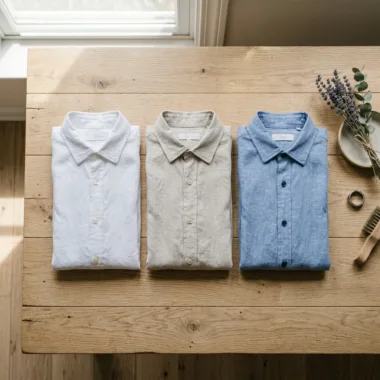
For a starting wardrobe, one white, one light blue, and one earthy neutral — like the Deep Olive Prestige Linen Shirt or Pale Taupe Signature Linen Shirt — will cover formal, business-casual, and weekend wear without repeating a look twice in one week.
How Do You Actually Choose Among the Top 10 Linen Shirt Brands in India?
Strip away the marketing language, and choosing among the top 10 linen shirt brands in India comes down to four questions, in this order:
- Does the product page name a specific LEA count, and does it fall in the 44–60 range?
- Does it name the actual flax source (a mill or region), not just “imported linen”?
- Does your size actually exist in that brand’s range — including if you need beyond XL?
- Are you paying for fabric and construction, or mostly for retail overhead and brand markup?
Avoid picking a shirt on price, trend, or logo recognition alone — fabric quality, fit, and how well the collar and cuffs are constructed are what actually determine how the shirt looks after its fiftieth wash, not its fifth.
Frequently Asked Questions
Which are the top 10 linen shirt brands in India?
The top 10 linen shirt brands in India covered in this guide are Linen Club, Derris, Linen Trail, Andamen, FabIndia, Yell, Nicobar, Louis Philippe, Marks & Spencer, and Rare Rabbit — ranging from legacy textile houses to direct-to-consumer specialists, each suited to a different priority: brand trust, fabric-quality-per-rupee, artisanal craft, tailoring precision, or size inclusivity.
Is a 60 LEA linen shirt better than a 30 or 40 LEA one?
Generally yes for shirting: a higher LEA count means a finer, lighter yarn with a softer hand-feel and better breathability. The 44–60 LEA range is treated as the gold standard for Indian tropical shirting because it balances that fineness against enough density to keep the fabric from feeling flimsy or overly sheer.
What GSM is best for a linen shirt in Indian summer?
A GSM of roughly 110–135 is considered ideal, with 120–125 GSM often the most versatile — light enough to stay cool in extreme heat, dense enough to hold a crisp collar and placket.
How much should a genuine 100% linen shirt cost in India?
Legacy and artisanal brands with comparable European or Irish flax typically price a pure linen shirt between ₹3,800 and ₹7,500, largely because of retail distribution costs. Direct-to-consumer brands sourcing the same fabric grade, like Derris, can offer the identical 60 LEA fineness for roughly ₹2,500–₹3,000 by removing retail markup from the price.
Does linen shrink after washing, and how do I prevent it?
Raw, untreated linen can shrink 6% or more on its first wash. Brands that pre-wash the fabric before cutting reduce this to under 2% over the shirt’s lifetime. Regardless of brand, always wash linen in cold-to-lukewarm water and avoid high-heat tumble drying.
Is Derris linen as good as Linen Club or Linen Trail?
On raw fabric fineness, yes — Derris uses 60 LEA Burgoyne Irish linen, which sits in the same premium band claimed by Linen Trail and top-tier Linen Club collections. The meaningful difference is price and sizing: Derris’s direct-to-consumer model brings that fabric grade in at roughly ₹2,500–₹3,000, with sizing that extends to 5XL, versus the ₹4,000+ territory and narrower sizing common among comparable legacy and artisanal brands.
What’s the real difference between slim fit and regular fit linen shirts?
Slim fit is cut closer to the body with a tapered waist — sharper for meetings and client-facing days. Regular fit gives more room through the chest and waist for airflow and ease of movement, better suited to long office hours or travel days. Neither is objectively superior; the right choice depends on how the shirt will actually be worn.
Can plus-size men find good linen shirts in India?
Sizing is genuinely uneven across the market — several premium linen labels cap out around XL or XXL. Marks & Spencer and Derris are two of the more size-inclusive options on this list, with Derris extending its 60 LEA linen range from XS through 5XL in both slim and regular fit.
Ready to Feel the Difference in 60 LEA Linen?
Every shirt in the Derris Supreme collection is woven from genuine Burgoyne Irish linen, cut in slim and regular fit from XS to 5XL, and priced without a retail middleman in between.
Shop the Linen Collection →That’s our honest read on the top 10 linen shirt brands in India for 2026 — legacy trust at the top, a direct-to-consumer challenger closing the fabric-quality gap right behind it, and eight more brands each built for a different priority, whether that’s artisanal craft, engineered fit, ethnic-western style, or size-inclusive shopping. Whichever you choose, check the LEA count and the flax source before you check the price tag — that’s the difference between a linen shirt that earns its place in rotation and one that’s linen in name only.

%20(320%20x%20160%20px)%20(2).png)