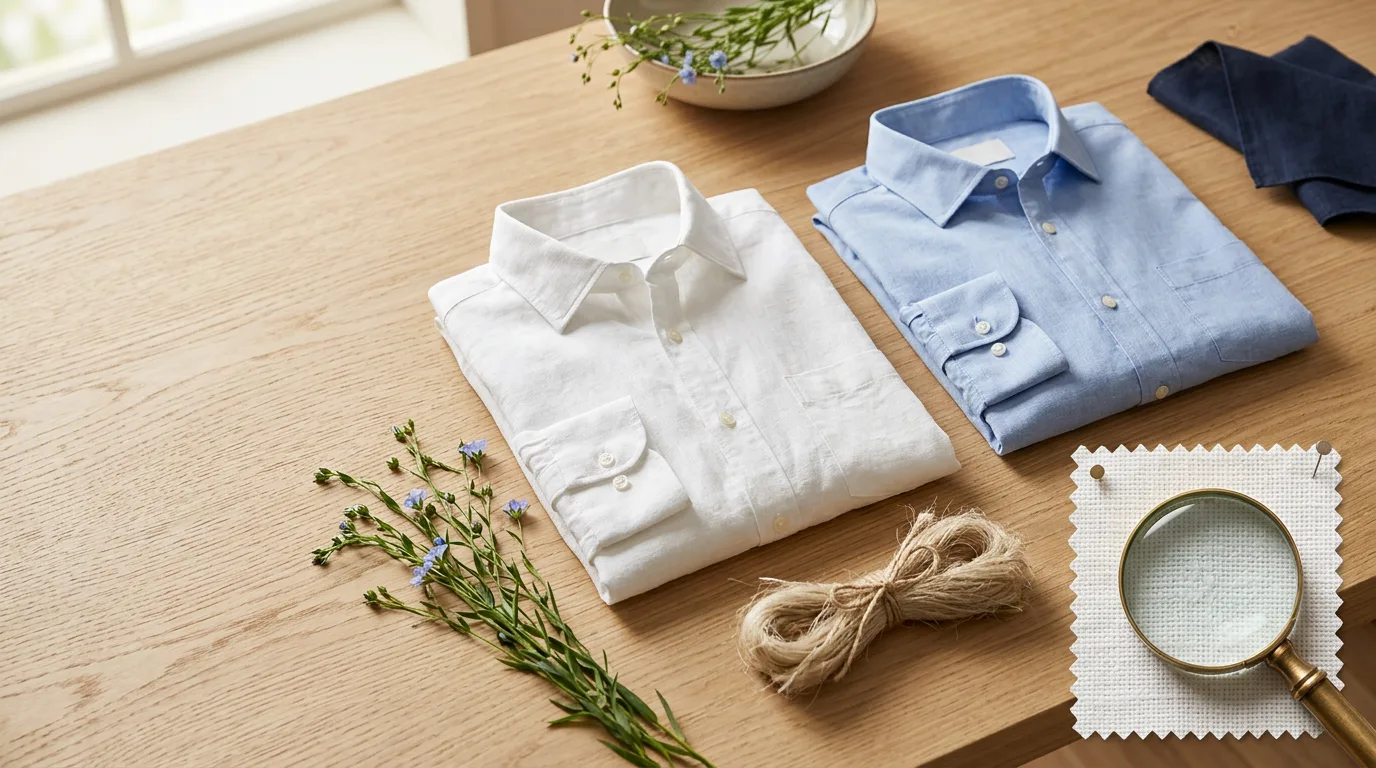
You see a “linen shirt” online for ₹999. Then you see another one for ₹2,495 and wonder why. Both say “linen”, and both look similar in photos. But in the Indian summer, they feel very different after two hours outside.
The short answer is that most shirts sold as “linen” for ₹999 are not pure linen. They are usually cotton-linen or polyester blends. This guide explains linen shirts vs cotton shirts and pure linen vs cotton linen in simple English. You will learn what each fabric is made of, how it handles heat and sweat, what you pay for, and how to check if a shirt is really 100 pure linen before you buy.
- Pick pure linen if you want the coolest, driest and longest-lasting shirt for hot, humid weather.
- Pick a cotton-linen blend only if you need a flatter, less creased look for strict office dress codes.
- Avoid polyester-linen. It traps heat and sweat, even when it looks like linen.
- For shirts, 60 LEA is the best balance of softness, airflow and strength.
What is the actual difference between pure linen and cotton-linen shirts?
Where does pure linen shirt fabric come from?
Pure linen comes from the stem of the flax plant (Linum usitatissimum). Good flax grows in cool, damp climates such as Belgium, France, the Netherlands and Northern Ireland. The fibres are long, straight and strong. Cotton fibre is different. It is a short, fluffy hair that grows around the cotton seed.
Why is linen harder and costlier to make?
Making linen takes many steps. Farmers ret the stalks, which means soaking them so bacteria break down the woody glue. Then the stalks are crushed (scutching) and combed (hackling). Combing splits the flax into two grades:
- Line flax: long, smooth, shiny and strong. This makes fine shirting.
- Tow flax: short, tangled leftovers. They are rougher and more likely to feel scratchy or pill.
Premium mills wet-spin line flax. The fibres pass through hot water, which softens the natural gum, so they glide into a fine, smooth yarn. Budget makers often dry-spin tow flax. That gives a hairy yarn with sharp fibre ends that irritate sweaty skin.
Why do brands blend cotton into linen?
The main reason is cost. In Indian wholesale markets such as Surat and Ahmedabad, 100% pure 60 LEA linen shirting trades at roughly ₹520–₹736 per metre. Cotton-linen shirting trades at roughly ₹125–₹245 per metre. Cotton also fills gaps in the weave, so rougher tow flax feels softer on the rack. After sweat and repeated washing, though, the cotton swells, holds moisture and loses the crisp drape of real linen.
What does 60 LEA mean in a pure linen shirt?
Cotton uses thread count. Linen uses LEA, because flax yarn is naturally uneven. Finer yarn needs better long-line flax and slower wet-spinning, so it costs more to make. That is why you should check LEA before paying for any “pure linen” shirt.
| LEA count | How it feels | Best used for | Good for Indian summer shirts? |
|---|---|---|---|
| 14–20 | Very coarse, heavy | Canvas, sacks, rugs | No |
| 25–30 | Coarse, heavy slubs | Trousers, jackets, upholstery | Too heavy for shirts |
| 30–45 | Medium, visible texture | Casual overshirts, kurtas | Acceptable for casual wear |
| 60 (gold standard) | Smooth, fine, fluid drape | Smart-casual and formal shirts | Yes. Best balance |
| 80 | Very fine, silky | Delicate dress shirts, pocket squares | Comfortable but needs gentle care |
| 100–150 | Sheer, fragile | Ceremonial wear | Not practical for daily use |
Is a higher LEA count always better?
No. Below about 40 LEA, the yarn has short, sharp fibre ends that can irritate sweaty skin. Above 80 LEA, the fabric turns see-through and delicate, and it will not survive weekly washing. That makes 60 LEA the sweet spot for men’s shirts in India. It is soft enough to feel refined and strong enough to last years.
Our insight: LEA alone does not tell you the whole story. Ask for LEA and fabric weight (GSM) together. For Indian summers, roughly 110–135 GSM works well. It is light enough for airflow and firm enough to hold a collar. Also ask for the mill name. A named mill is a better sign than the phrase “imported fabric”.
Is linen or cotton better for Indian summer heat and sweat?
Why does pure linen feel cooler?
Each flax fibre has a tiny hollow channel (the lumen) down its centre. Woven together, these channels help air move through the yarn itself, not only between threads. Pure linen can have two to three times the air permeability of tightly woven cotton. When cotton is blended in, its twisted, ribbon-like fibres swell and partly block those gaps, so airflow drops.
How fast does linen pull heat away from your skin?
Flax fibres are straight and smooth, so they carry heat away from your body quickly. Research data used for this article puts linen’s thermal conductivity at about 0.067 W/m·K, against about 0.040 for cotton and 0.014 for polyester. Cotton’s fibres coil and trap still air, which acts like insulation. That cool feeling you notice the moment you put on linen is real physics.
How does linen handle sweat in humid cities like Mumbai and Chennai?
- Absorbs more: Pure flax can take up to about 20% of its dry weight in moisture before it feels damp.
- Dries faster: Linen dries in roughly 20–40 minutes in the comparison data, against 60–120 minutes for cotton.
- Doesn’t cling: Flax is stiff, even when wet. It stays slightly away from your skin and keeps air moving. Wet cotton goes limp and sticks.
- Gets stronger when wet: Flax gains strength when wet, so washing and sweat do not weaken it.
Polyester absorbs almost no sweat. Moisture sits on your skin, and the shirt traps heat and odour.
Pure linen vs cotton-linen vs polyester blend: full comparison table
| Parameter | 100% Pure Linen (60 LEA) | Cotton-Linen Blend | Polyester-Linen Blend |
|---|---|---|---|
| Fibre | Long-line flax, hollow lumen | Short cotton plus often coarser tow flax | Synthetic filaments with a little flax or viscose |
| Breathability | Maximum | Moderate. Cotton swells and blocks airflow | Poor. Traps heat |
| Cool feel on skin | High, instant cool touch | Moderate to neutral | Very low, feels warm and slick |
| Sweat and drying | Superior. Dries in about 20–40 min | Slower. Dries in about 60–120 min | Clammy. Sweat stays on skin |
| Wet cling | Low cling | Low to moderate resistance | Clings from static and sweat |
| Wrinkling | High. Soft, natural creases | Moderate. Flatter look | Very low. Stiff, plastic feel |
| Durability | Exceptional. Softer with every wash | Moderate. Can pill, collar tires | Strong fibre but pills, shines, holds odour |
| Wholesale fabric cost (India) | ₹520–₹800+ per metre | ₹125–₹356 per metre | ₹84–₹140 per metre |
| Typical retail price | ₹2,495–₹2,995 (direct-to-consumer); ₹4,000–₹7,500+ (legacy retail) | ₹1,299–₹2,499 | ₹699–₹1,199 |
Prices are indicative market ranges and change often. Check current product pages before you buy.
Why does a pure linen shirt cost ₹2,500+ when a “linen” shirt costs ₹999?
One pure 60 LEA shirt uses premium 58-inch-wide European flax fabric. Only a small part of the flax harvest is long enough to wet-spin into 60 LEA yarn without breaking. The fabric alone can cost ₹900–₹1,200 before cutting, collar fusing or stitching.
Is pure linen worth the extra money?
Think in cost per wear, not price tag. Flax is one of the strongest natural fibres. It grows softer over many washes. A ₹2,495 pure linen shirt worn over five summers can cost less per wear than a ₹999 blend that pills, yellows and loses shape in two seasons. A first-order discount code can narrow the gap further.
How can you identify authentic 100% pure linen?
1. The touch test: does it feel cool and crisp?
Press your palm flat on the fabric for three seconds. Real linen feels cool straight away. Cotton-linen feels neutral or slightly warm, and polyester feels slick. Rub the fabric between thumb and finger. A good 60 LEA linen feels crisp, dry and smooth. A plush, brushed, t-shirt-like feel means a lot of cotton. A prickly or scratchy feel suggests low-grade, dry-spun tow flax.
2. The weave test: look for natural slubs
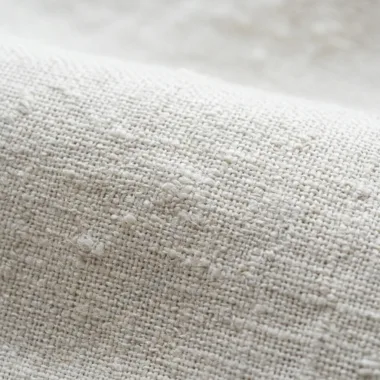
Hold the fabric against a bright light. Real linen has small, irregular thick spots (slubs) in both directions. Fake slub fabric often shows identical thick spots at regular intervals, or only in one direction. Real linen also has a quiet natural sheen under angled light, while cotton blends look flat and chalky. A quick extra check is to press one layer to your lips and exhale. Breath should pass through easily. Heavy coatings or dense polyester blends block it.
3. The crease and water-drop tests
Squeeze a piece of the hem in your fist for five seconds. Pure linen keeps sharp creases. If it springs back almost flat, it likely has polyester. If the folds look soft and rounded, it likely has cotton or rayon. Then put one drop of water on the inside shirt tail. Pure linen soaks it up quickly in an even ring. On polyester, the drop beads on the surface.
4. The burn test (swatch or loose thread only)
Never test a finished shirt. Use a loose thread or spare swatch, and take care with flame.
| Check | 100% Linen | 100% Cotton | Cotton-Linen | Polyester |
|---|---|---|---|---|
| Near flame | Does not curl away | Does not curl away | Does not curl away | Shrinks and curls away |
| Burn speed | Steady, a bit slower than cotton | Fast and bright | Medium | Melts and sputters |
| Smell | Burning grass or dry leaves | Burning paper | Paper with a faint woody note | Sweet, chemical, melting plastic |
| Ash | Fine, light-grey, feathery | Fine, dark-grey | Mix of dark and light grey | Hard plastic bead |
What should you check on a product page?
- The fibre label says 100% linen, not “linen look” or “linen feel”.
- The page states the LEA count (aim for 44–60).
- The page names the mill.
- The page mentions pre-washing or fabric treatment. If it doesn’t, size up slightly or hand-wash the first time.
If a brand won’t tell you these three things, treat the silence as a warning. For a wider comparison of brands, see our guide to the top linen shirt brands in India.
Which should you buy: pure linen or cotton-linen?
| Your situation | Best choice |
|---|---|
| Hot, humid city (Mumbai, Chennai, Kolkata, Delhi in summer) | 100% pure linen |
| Travel, resort, weddings, weekends | 100% pure linen |
| Want a shirt that lasts many years | 100% pure linen |
| Strict corporate dress code, no tolerance for creases | Cotton-linen blend, or a wrinkle-treated cotton shirt |
| Tight budget, short-term use | Cotton-linen blend (never polyester-linen) |
For more on cotton against linen as everyday fabrics, read our full guide to linen vs cotton shirts.
What are Derris 100% pure linen shirts made of?
We are Derris, a New Delhi menswear brand that makes only men’s shirts. Our team has more than 40 years of experience making garments for domestic and export labels. Our Derris Supreme 60 LEA linen shirts use 100% linen from Burgoyne, a linen house founded in 1912 in Lurgan, Northern Ireland. We sell direct to customers, so you avoid distributor and showroom markups.
Fabric
60 LEA Burgoyne Irish and European flax. Smooth feel from the first wear.
Price
₹2,495–₹2,995 (MRP ₹3,995), inclusive of taxes.
Compare this with ₹4,000–₹7,500+ at many legacy retail and boutique brands.
Sizes
XS (36) to 5XL (52), in Slim and Regular fits. Enter your height to get a custom shirt and sleeve length.
Construction
Quality fusing and premium buttons for a collar that holds its shape.
Which Derris Linen Shirt Should You Start With?
Every Derris linen shirt is woven from genuine 60 LEA Burgoyne linen, the same Irish mill used by names like Giorgio Armani and Ralph Lauren, cut in a tailored fit built to stay sharp through a full Indian summer.
 60 LEA Linen
Derris Supreme Imperium — Pearl White
Crisp white linen with a relaxed casual fit — moves easily between smart-casual and weekend ease.
 60 LEA Linen
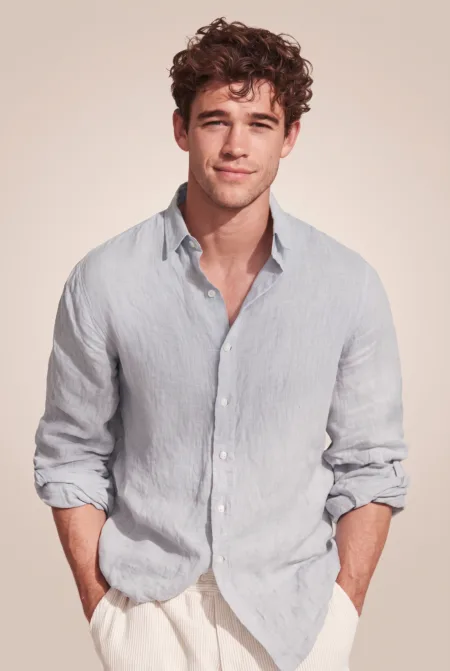
Derris Supreme Sovereign — Powder Blue
Breezy coastal elegance from heritage Irish mills, with natural cooling comfort built in.
 60 LEA Linen
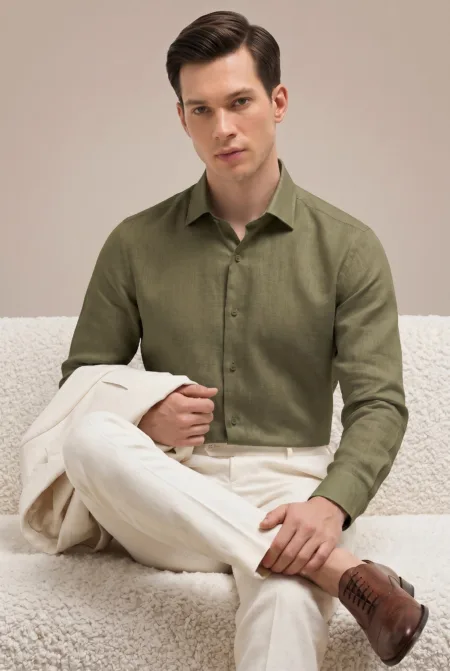
Derris Supreme Prestige — Deep Olive
Distinguished military-chic tone with natural cooling comfort — a strong resort-wardrobe pick.
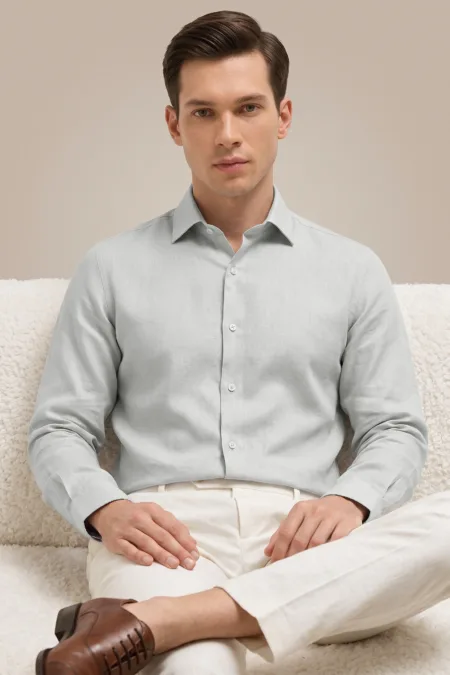 60 LEA Linen
Derris Supreme Royal — Light Grey
A sleek, monochromatic tone from certified 60 LEA Irish flax — refined and easy to dress up or down.
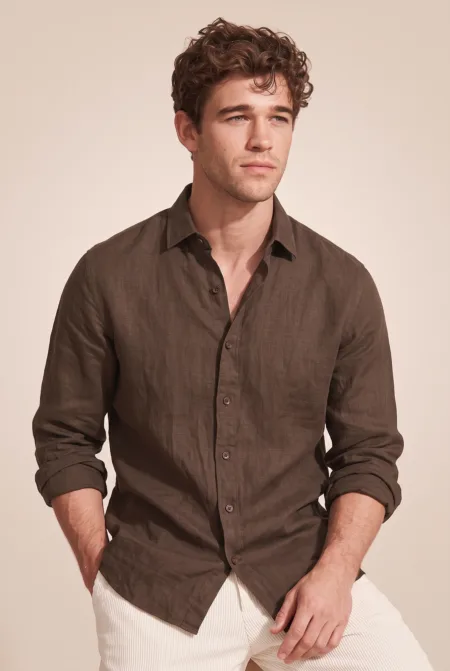 60 LEA Linen
Derris Supreme Elite — Carafe Brown
Deep, espresso-inspired shade from 100% European 60 LEA flax — moody elegance for evenings.
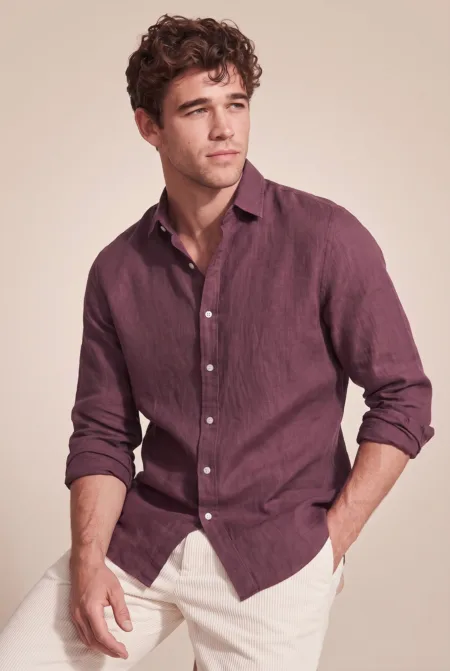 60 LEA Linen
Derris Supreme Heritage — Stone Brown
Dusty desert neutral that pairs seamlessly with ivory chinos, off-white trousers, or denim.
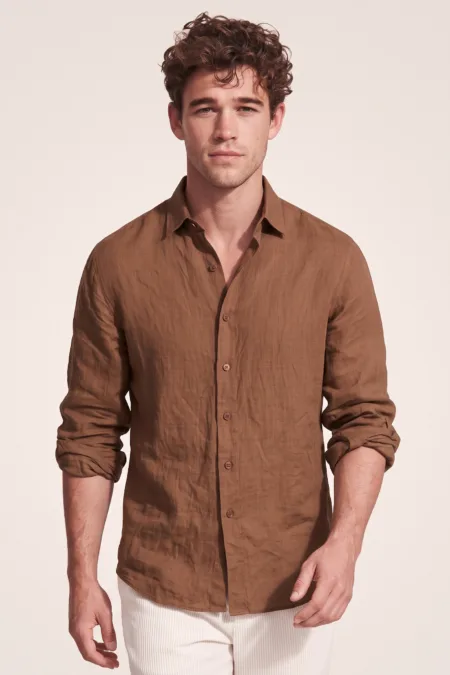 60 LEA Linen
Derris Supreme — Copper Brown
Warm, radiant rustic undertone that captures natural evening light with a refined texture.
 60 LEA Linen
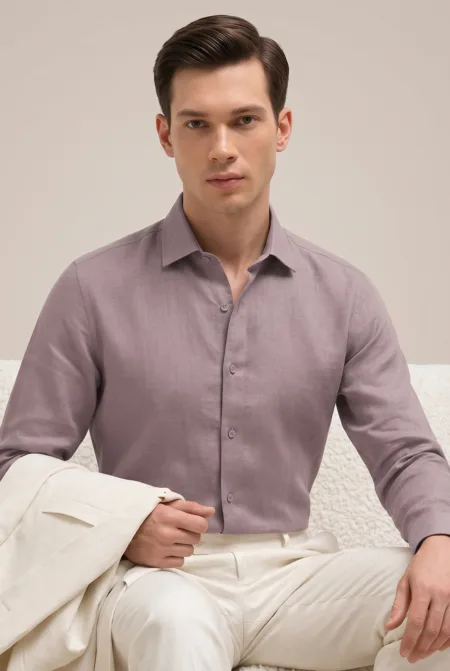
Derris Supreme Heritage — Muted Mulberry
A refined dusty mulberry shade with exceptional cooling breathability and a modern colour profile.
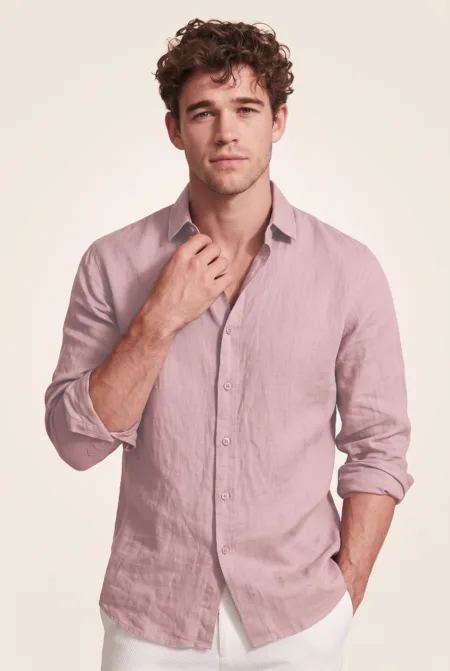 60 LEA Linen
Derris Supreme — Ashy Pink
Soft, desaturated pastel pink providing airy, relaxed sophistication without any loud glare.
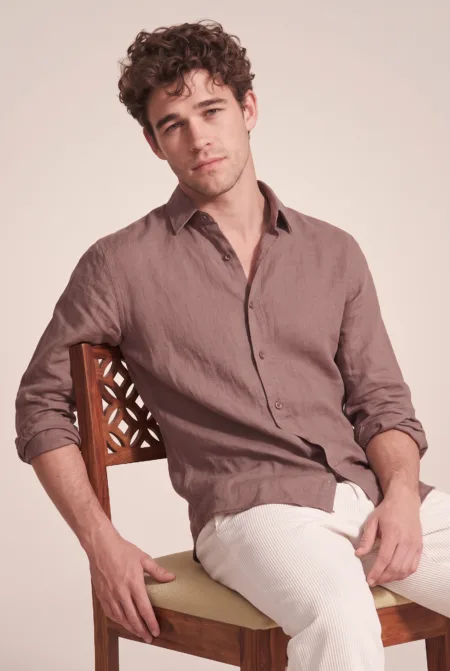 60 LEA Linen
Derris Supreme — Twilight Mauve
Subtle lavender-grey nuance engineered for evening cocktails and understated luxury.
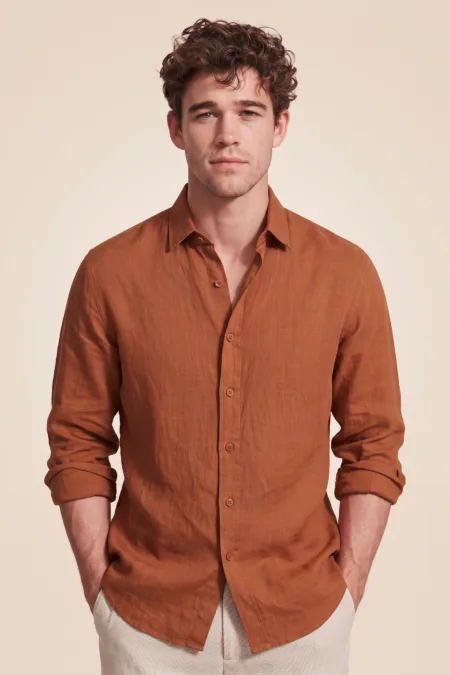 60 LEA Linen
Derris Supreme — Rust Orange
Sun-baked terracotta hue tailored for tropical getaways, beach dinners, and vacation styling.
How do you wash and care for a pure linen shirt?
- Use a gentle cycle in cool or lukewarm water with mild detergent.
- Don’t wring hard. Hang it to dry in the shade.
- Steam-iron while slightly damp.
- Expect a little shrinkage in the first few washes. Good linen shirts are cut with some extra room for this.
Ready to try real linen?
Explore the Derris collection of 60 LEA Burgoyne Irish linen shirts, sized XS to 5XL.
Explore Derris 100% Pure Linen ShirtsFrequently asked questions about pure linen and cotton-linen shirts
What is the main difference between pure linen and cotton-linen shirts?
Pure linen uses only flax fibre. Cotton-linen mixes in cotton. Pure linen is cooler, dries faster and lasts longer. Cotton-linen creases less but holds heat and moisture more.
Are linen shirts better than cotton shirts in summer?
Yes, in peak heat and humidity. Linen lets more air through and dries faster. Cotton is still a good all-rounder for mild weather and air-conditioned offices.
What does 100 pure linen shirt fabric feel like?
Good 60 LEA linen feels crisp, dry and smooth, with small natural slubs. It feels cool when it first touches your skin. It should not feel plush like a t-shirt or scratchy like sacking.
Why are 100 pure linen shirts so expensive?
Long-line flax is scarce, it needs careful processing, and it is wet-spun into fine yarn. That raises fabric costs far above those of blends. Pure linen also lasts many years, so cost per wear is lower than the price suggests.
Is 60 LEA linen good for shirts?
Yes. 60 LEA is widely seen as the best balance for shirts. It is smooth and breathable, strong enough for regular washing, and not see-through.
Do pure linen shirts wrinkle a lot?
Yes, and that is normal. Low elasticity gives linen soft, natural creases. If you want a flatter look, choose a blend or a wrinkle-treated cotton shirt.
How can I tell if a shirt is really 100% linen?
Check the fibre label, look for slubs in both directions, feel for the cool touch, do the crease and water-drop tests, and use a burn test on a loose thread. Real linen smells like burning grass and leaves feathery grey ash.
Is a cotton-linen blend a bad choice?
Not always. It suits strict office settings where you want fewer creases. It will not match pure linen for airflow, sweat handling or lifespan. A polyester-linen blend is the one to skip for hot weather.
Do linen shirts shrink?
A small amount of shrinkage in the first few washes is normal. Wash in cool water, avoid high heat and hang dry to keep the fit steady.